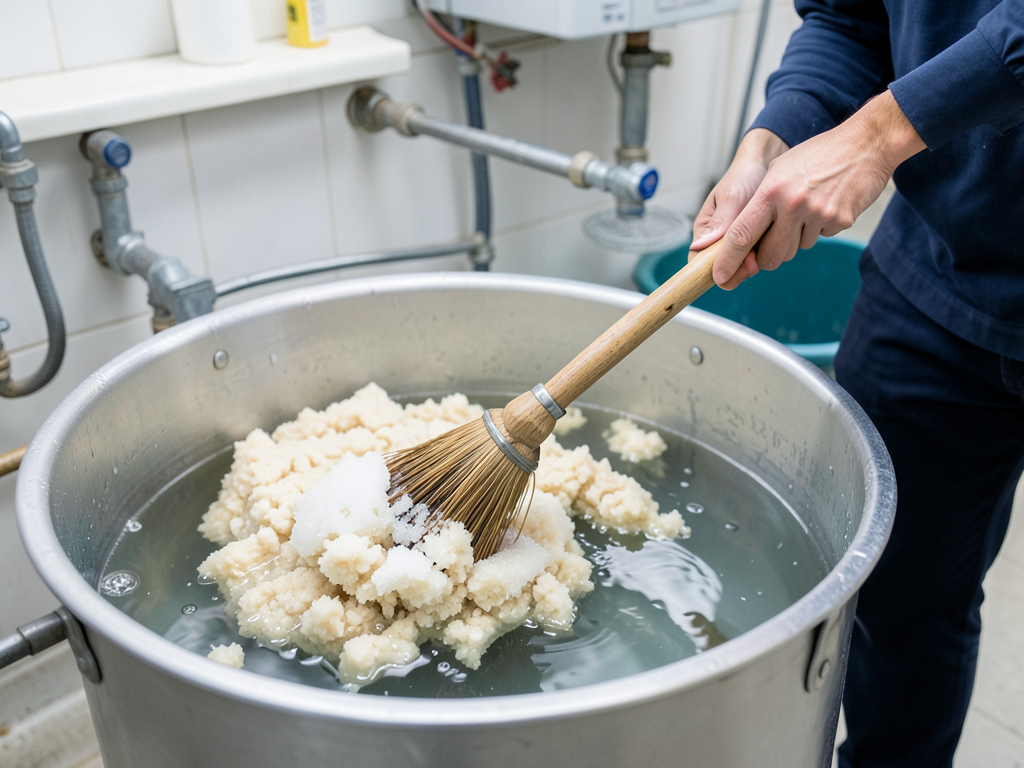




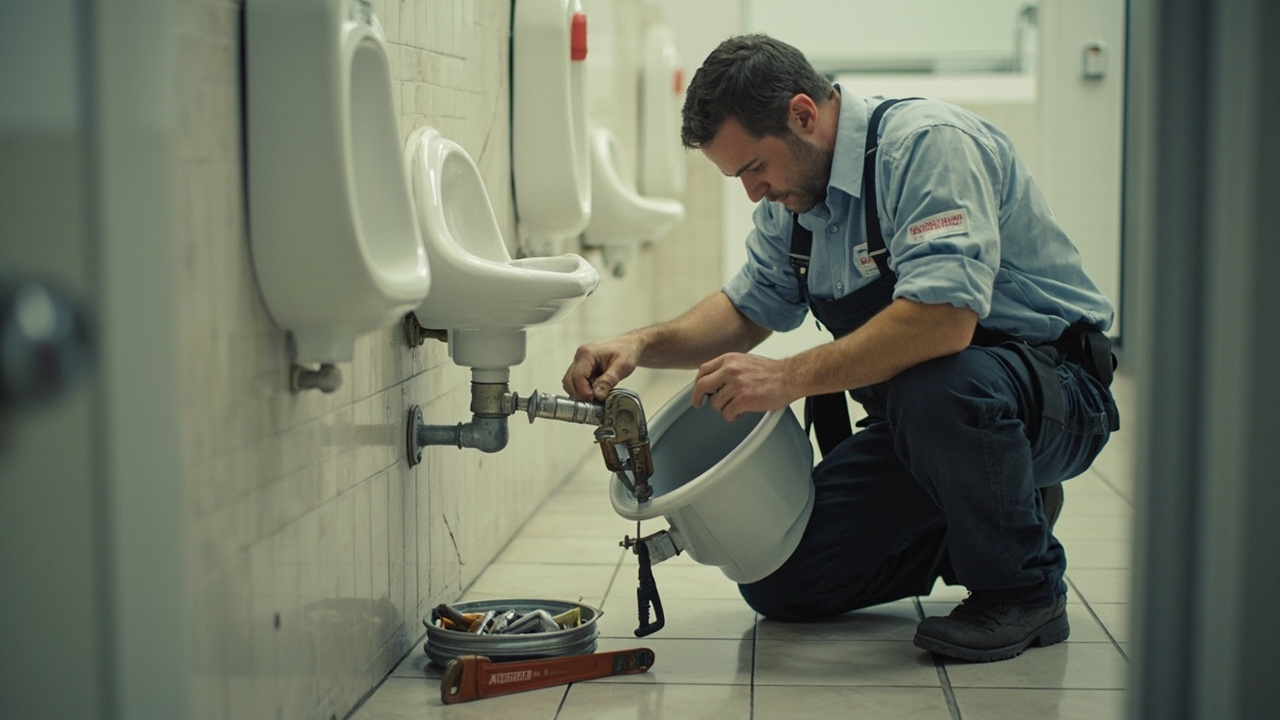

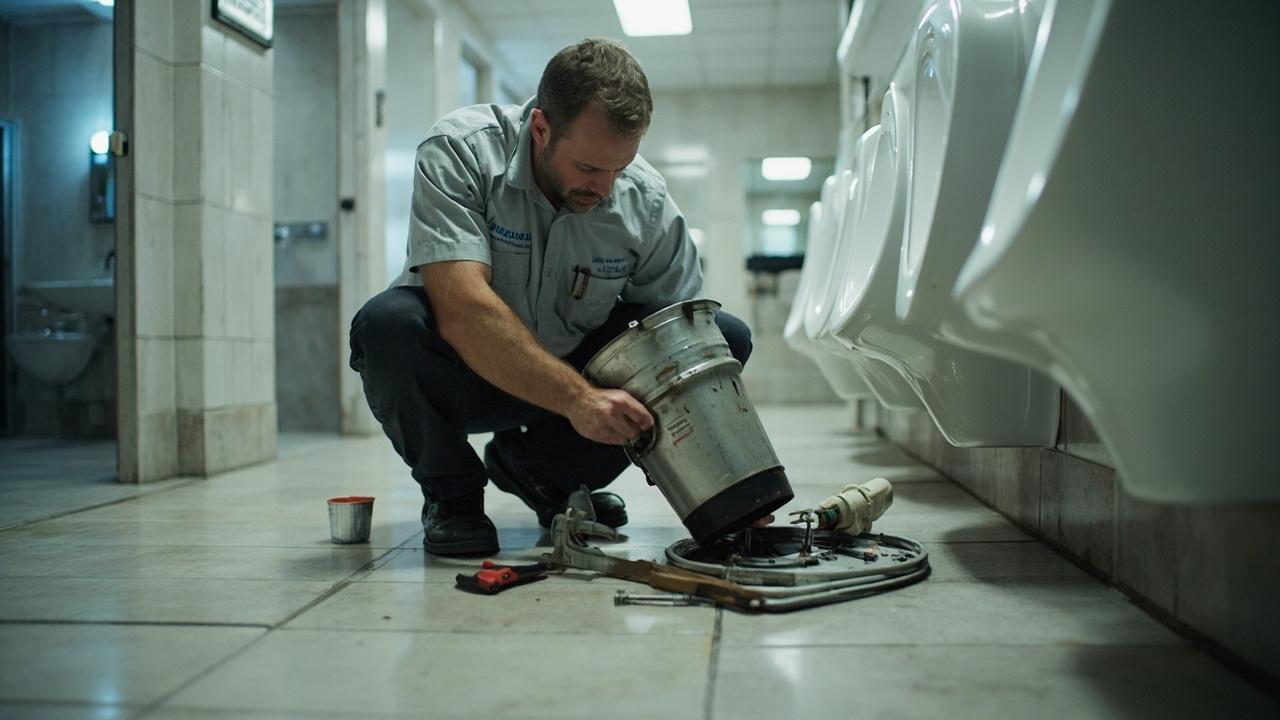
Oklahoma City's municipal water supply carries 120-180 ppm total dissolved solids, with significant calcium carbonate and magnesium content. This hard water profile accelerates mineral deposit formation inside flushometer valve bodies and on diaphragm surfaces. Commercial fixtures cycling hundreds of flushes daily accumulate scale faster than residential units. The result is sticky diaphragms, restricted orifices, and premature seal degradation. Facilities along older water mains in downtown Oklahoma City and Stockyards City often experience higher sediment loads that compound the problem. Commercial urinal maintenance schedules must account for this accelerated wear, with diaphragm replacements needed 30 to 40 percent more frequently than in soft-water markets.