
Why Your Water Softener Salt Tank Is Caking Up (And How to Fix the Salt Bridge)
If you’re seeing a crusty, hard layer of salt forming in your water softener tank that won’t dissolve, you’ve got a salt bridge. This common problem in Oklahoma City homes happens when humidity and mineral-rich water create a solid crust above the water level, preventing your softener from working properly. You’ll notice hard water spots on dishes, soap that won’t lather, and a salt level that never seems to go down even when your system regenerates. Oklahoma City Water Utilities Trust.
The good news is that breaking a salt bridge is usually a simple DIY fix. Using a broom handle or similar tool, you can gently tap the crust to break it apart, then remove the loose chunks and reset your system. But before you grab that broom, you need to understand why Oklahoma City’s climate makes this problem worse and how to prevent it from happening again. How to Tell if Your Oklahoma City Home Has a Slab Leak Under the Foundation.
Oklahoma City’s average relative humidity sits around 65-70% during summer months, which is significantly higher than many other regions. When warm, moist air enters your brine tank, it causes the salt to clump together and form that stubborn crust. Combined with our notoriously hard water—typically 10-15 grains per gallon from the Oklahoma City Water Utilities Trust—your softener works overtime, using more salt and creating more opportunities for bridging to occur. Clearing Stubborn Clogs With Professional Drain Cleaning in Nichols Hills.
Before attempting any fix, turn off your water supply using the bypass valve. This prevents water from flowing through the system while you work. If you don’t know where your bypass valve is located, it’s usually a lever or knob on the water line leading to your softener. Never try to break a salt bridge with the system running or under pressure.. Read more about Common Well Water Challenges for Homeowners Near Lake Arcadia.
What is a Salt Bridge and Why Does it Happen?
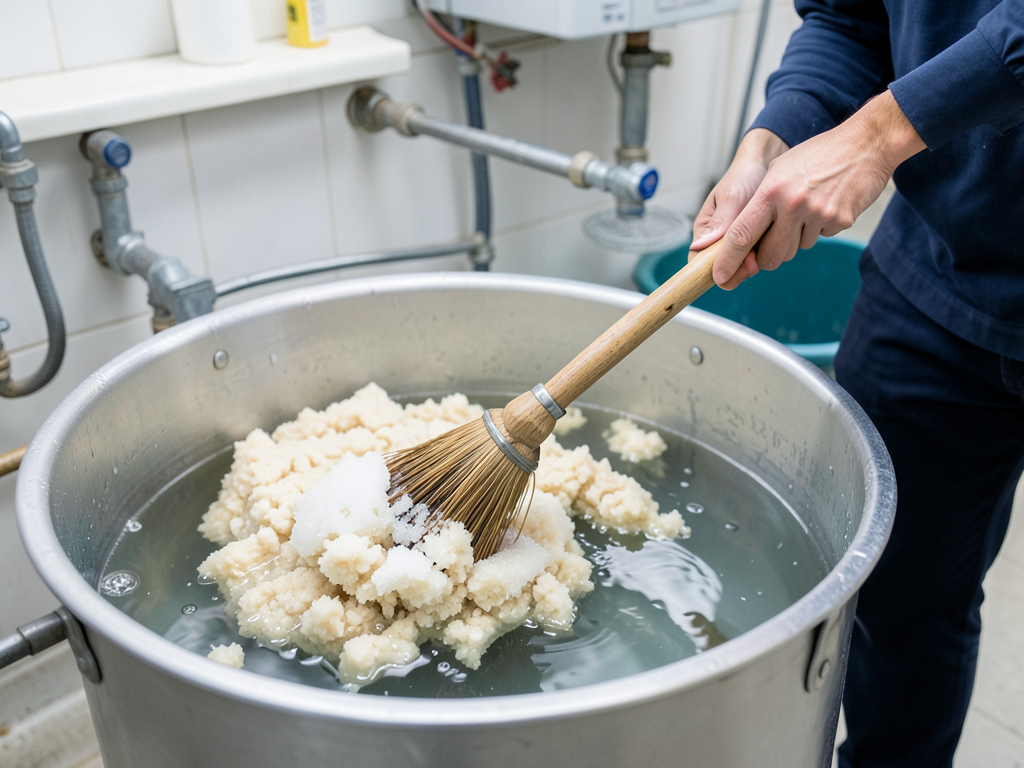
A salt bridge forms when a hard crust develops above the water level in your brine tank, creating a gap between the salt and the water below. Your water softener needs that salt to dissolve in water to create brine, which then regenerates the resin beads that remove minerals from your hard water. When a bridge forms, the salt can’t reach the water, so no brine is created, and your softener stops working.
The science behind it is simple: salt naturally attracts moisture. In Oklahoma City’s humid climate, that attraction becomes a problem. The moisture causes individual salt crystals to stick together, forming larger clumps. Over time, these clumps fuse into a solid mass. The process accelerates when you use certain types of salt or when your tank is located in a warm area like a garage or utility closet.
Oklahoma City’s water contains high levels of calcium and magnesium, which means your softener works harder than systems in areas with softer water. This increased usage means more salt cycles, more humidity exposure, and more opportunities for bridging to occur. It’s a perfect storm of conditions that makes salt bridges particularly common in our area.
Signs You Have a Salt Bridge in Your OKC Home
Recognizing a salt bridge early can save you from days of hard water damage. The most obvious sign is when your water suddenly feels harder than usual. You might notice white spots on glasses and dishes that don’t wipe away easily, or soap that barely lathers in the shower. Your skin might feel dry and itchy after bathing, and laundry might come out stiff or discolored.
Another clear indicator is checking your brine tank. If the salt level hasn’t dropped in weeks despite normal water usage, you likely have a bridge. The salt should gradually decrease as your system regenerates. If it stays at the same level for an extended period, the salt isn’t dissolving properly.
Sometimes you can actually see the bridge forming. Look for a solid, crusty layer across the top of the salt. It might appear as a dome or a flat crust that sounds hollow when tapped. You might also notice your softener running more frequently as it tries to compensate for the lack of brine, which can increase your water bill.
Hard water damage in Oklahoma City homes often shows up in plumbing fixtures first. You might see white, chalky buildup on faucets and showerheads, or notice reduced water pressure from mineral deposits in your pipes. These are all signs that your softener isn’t working, and a salt bridge could be the culprit.
Step-by-Step Guide: How to Safely Break a Salt Bridge
- Turn Off Water Supply
Locate your softener’s bypass valve and turn it to the “bypass” position. This stops water flow to the softener while you work. If you can’t find the bypass valve, you may need to shut off the main water supply to your home.
- Break the Bridge
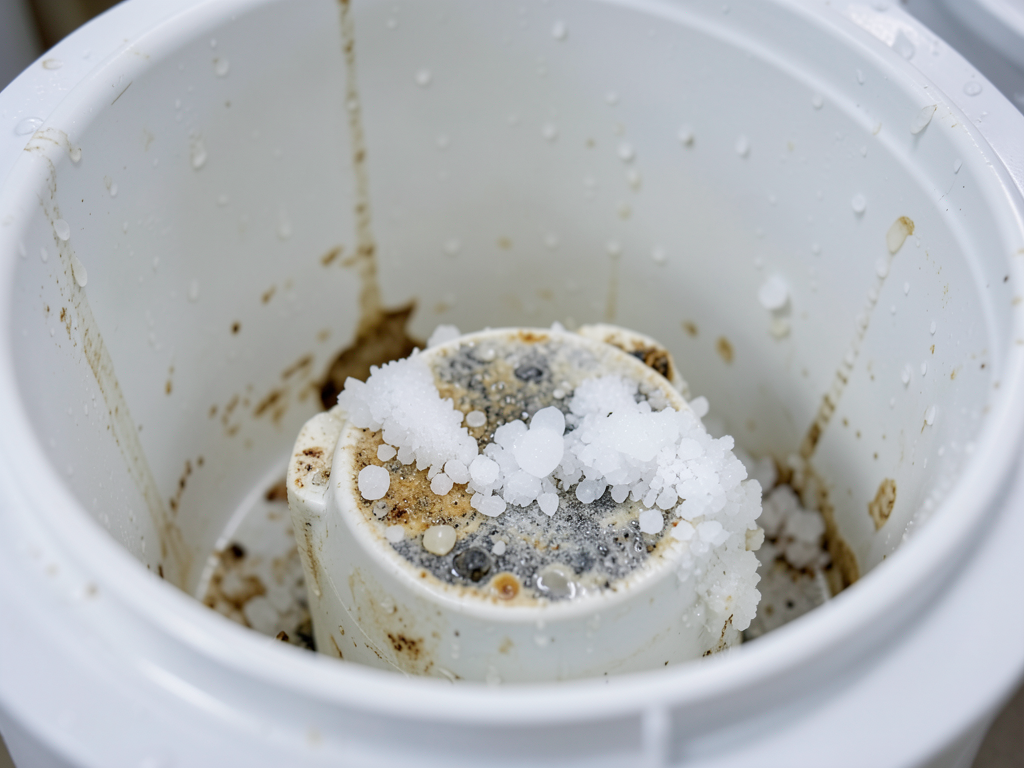
Using a broom handle, mop handle, or similar blunt tool, gently tap the top of the salt crust. Start at the edges and work your way toward the center. You’re listening for a hollow sound that indicates you’ve broken through the crust. Never use sharp objects that could damage the tank.
- Remove Loose Salt
Once you’ve broken through, use a plastic scoop or your hands (wear gloves) to remove the loose salt chunks. Be careful not to let pieces fall into the bottom of the tank where they could block the brine well.
- Check the Water Level
After removing the bridge, check if there’s water in the bottom of the tank. If the tank is completely dry, your system may have other issues beyond just a salt bridge. The water should be about 3-4 inches deep.
- Reset and Recharge
Turn your bypass valve back to the “service” position, then manually start a regeneration cycle on your softener. This will create new brine and restore your system’s ability to soften water.
- Clean Up
Remove any remaining salt chunks and wipe down the inside of the tank with a clean cloth. This prevents new bridges from forming in the same spots.
Be patient during this process. Breaking a salt bridge too aggressively can crack your tank or damage internal components. If you encounter resistance, try a different angle or location. The goal is to create channels through the bridge so water can reach the salt below.
After breaking the bridge, monitor your system for the next 24-48 hours. You should notice improved water quality as the softener begins working properly again. If you don’t see improvement, or if the bridge forms again quickly, you may have a more serious issue requiring professional attention.
Why Oklahoma Humidity Causes Frequent Salt Bridges
Oklahoma City’s climate creates the perfect conditions for salt bridging. Our summer humidity often exceeds 70%, which is well above the threshold where salt begins to clump and bridge. The combination of heat and moisture accelerates the chemical processes that cause salt crystals to stick together.
During Oklahoma’s storm season, rapid temperature changes can also contribute to bridging. When warm, humid air enters a cooler garage or utility room where your softener is located, condensation forms on the salt. This repeated cycle of condensation and evaporation creates the perfect environment for salt bridges to develop.
The Oklahoma City Water Utilities Trust reports that our municipal water supply typically contains 10-15 grains per gallon of hardness minerals. This means your softener must process significantly more minerals than systems in softer water areas. The increased workload means more frequent regeneration cycles, more salt usage, and more opportunities for humidity to create problems.
Many Oklahoma City homes have water softeners installed in garages or unconditioned spaces. While this keeps the equipment out of living areas, it also exposes it to temperature and humidity fluctuations that accelerate salt bridging. Homes in newer developments like those in Edmond or Choctaw often have better-insulated utility spaces, but the problem persists due to our climate. Why Edmond Homeowners Should Invest in a Whole House Water Softener.
Understanding this local factor is crucial for prevention. Simply switching to a different type of salt or adjusting your maintenance schedule based on Oklahoma’s specific conditions can dramatically reduce bridging problems. What works in Arizona or Michigan won’t necessarily work here.
Prevention: Choosing the Right Salt for Oklahoma Water
Not all water softener salt is created equal, especially for Oklahoma’s unique conditions. The type of salt you use can significantly impact how often you deal with salt bridges. Understanding the differences between salt types and how they perform in our climate is essential for prevention.
Evaporated salt pellets are generally the best choice for Oklahoma City homes. These pellets are created through a purification process that removes most impurities and creates uniform, dense crystals that resist bridging better than other forms. They dissolve more consistently and produce less residue in your brine tank.
Rock salt, while cheaper, is not recommended for our area. It contains high levels of impurities like dirt and clay that can create sediment in your tank and contribute to bridging. The irregular crystal sizes also mean inconsistent dissolving patterns that can leave gaps where bridges form.
Solar salt crystals are another option, but they tend to be more prone to bridging in humid conditions. The flat, plate-like crystals can stack together and create air pockets that eventually collapse into solid bridges. They work better in drier climates but struggle in Oklahoma’s moisture levels.
Potassium chloride is an alternative to traditional sodium chloride salt that some homeowners prefer. While it’s more expensive, it dissolves more cleanly and produces less residue. However, it’s also more sensitive to humidity and can bridge more easily if not stored properly.
Regardless of which type you choose, proper storage is crucial. Keep your salt bags sealed until use, and store them in a cool, dry place. Never pour damp or clumped salt into your softener, as this introduces the very conditions that cause bridging.
When to Call a Licensed OKC Plumber
While breaking a salt bridge is often a DIY task, some situations require professional help. If you’ve tried breaking the bridge multiple times and it keeps reforming within days, you may have a more serious issue with your softener’s internal components or water chemistry.
Professional plumbers can diagnose whether you’re dealing with a simple salt bridge or more complex problems like a malfunctioning control valve, clogged brine line, or resin bed failure. These issues won’t respond to DIY fixes and can cause significant damage if left unaddressed. Need a Plumber Right Now in Edmond? We Handle Burst Pipes and Clogs Fast.
If you notice water leaking from your softener or see signs of corrosion on the tank, it’s time to call a professional. Salt is highly corrosive, and leaks can damage floors, walls, and nearby appliances. A licensed plumber can assess the damage and recommend whether repair or replacement is the better option. EPA WaterSense program.
Sometimes what appears to be a salt bridge is actually salt mushing, a more serious condition where dissolved salt recrystallizes into a thick sludge at the bottom of the tank. This requires complete tank cleaning and cannot be fixed with simple DIY methods.
Atlas Plumbing Oklahoma City offers comprehensive water softener services throughout the metro area, including Edmond, Choctaw, and surrounding communities. Our technicians understand the specific challenges Oklahoma’s water and climate create for these systems and can provide solutions that prevent recurring problems.
If your softener is more than 10-15 years old, professional assessment is particularly important. Older units may have worn components that contribute to bridging issues, and replacement parts for vintage models can be difficult to source. A professional can help you decide whether repair or upgrade makes more financial sense. Industrial Pipe Repair.
Maintaining Your Water Softener in Oklahoma’s Climate
Prevention is always better than cure when it comes to salt bridges. Establishing a regular maintenance routine based on Oklahoma’s specific conditions can save you from repeated DIY repairs and extend your softener’s lifespan. The key is understanding that our climate requires more frequent attention than manuals typically suggest.
Check your brine tank monthly during summer months when humidity is highest. Look for early signs of bridging, such as salt that appears dry on top but feels solid when pressed. Catching a bridge when it’s still forming makes removal much easier than dealing with a fully developed crust.
Clean your brine tank annually, even if you don’t see visible problems. Over time, salt residue and impurities build up on the tank walls and bottom, creating surfaces where bridges can form. A clean tank provides fewer opportunities for salt to stick together and bridge.
Consider installing a dehumidifier in the room where your softener is located, especially if it’s in a garage or unconditioned space. Reducing ambient humidity by even 10-15% can dramatically decrease salt bridging frequency. This is particularly effective in newer homes in developments like those in Edmond where utility spaces are better sealed.
Adjust your softener’s regeneration schedule seasonally. During Oklahoma’s most humid months, you might need to increase regeneration frequency slightly to prevent salt from sitting in the tank too long. However, be careful not to over-regenerate, as this wastes water and salt.
Keep a log of your maintenance activities and any problems you encounter. This record can help you identify patterns and adjust your prevention strategy. For example, you might notice that bridging occurs more frequently after particularly humid weeks or when using certain salt types.
Understanding Oklahoma City’s Water Quality
To effectively prevent salt bridges, it helps to understand what’s actually in Oklahoma City’s water. Our municipal supply comes primarily from surface water sources like Lake Hefner, Lake Overholser, and Lake Stanley Draper, with some groundwater supplementation. This water naturally contains minerals that create hardness.
The Oklahoma City Water Utilities Trust reports that our average water hardness ranges from 10-15 grains per gallon, with some areas experiencing even higher levels. For context, water is considered hard when it exceeds 7 grains per gallon. This means most OKC residents deal with moderately hard to very hard water.
Hardness is primarily caused by dissolved calcium and magnesium. These minerals enter the water as it flows through soil and rock, particularly in areas with limestone bedrock. Oklahoma’s geology contributes to our water’s mineral content, making softening necessary for most households.
The high mineral content means your water softener works harder here than in many other parts of the country. This increased workload translates to more frequent regeneration cycles, more salt usage, and more opportunities for problems like salt bridging to occur.
Understanding your specific water quality can help you optimize your softener’s performance. Some neighborhoods may have slightly different mineral profiles based on their proximity to different water sources or treatment facilities. A professional water test can provide this detailed information.
Atlas Plumbing offers water quality testing services throughout the Oklahoma City metro area. We can test your water’s hardness, iron content, pH levels, and other factors that affect softener performance. This data allows us to recommend the most effective prevention strategies for your specific situation.
Cost Factors for Water Softener Maintenance
Understanding the costs associated with water softener maintenance can help you budget effectively and make informed decisions about DIY versus professional service. While breaking a salt bridge yourself costs nothing but time, other maintenance tasks and repairs have associated costs that vary by your specific situation.
Professional salt bridge removal typically costs between $75-150, depending on the severity and your location within the OKC metro. This service includes not just breaking the bridge but also cleaning the tank, checking for other issues, and resetting your system properly.
Annual professional maintenance, which includes tank cleaning, resin inspection, and system calibration, usually runs $150-250. This preventive service can identify potential problems before they cause system failure or require expensive emergency repairs.
If your softener requires part replacement due to salt damage or age-related wear, costs can vary significantly. Control valves might cost $200-400, while a complete resin bed replacement could run $300-600. These repairs often make more sense for units under 10 years old.
Water quality testing, which helps optimize your softener’s performance and prevent problems, typically costs $50-100. This investment can save you money by preventing unnecessary salt usage and extending your system’s lifespan.
For homes in areas like Edmond or Choctaw where newer construction might mean newer plumbing systems, the cost-benefit analysis might favor professional maintenance more heavily. Newer homes often have more complex plumbing setups that require specialized knowledge to service properly.
Consider these costs in the context of what hard water damage costs. Scale buildup in pipes, water heaters, and appliances can reduce efficiency by 20-30%, increasing energy bills and shortening equipment lifespan. Preventing salt bridges helps your softener work properly, protecting these other investments.
Comparing Salt Types for Oklahoma Homes
| Salt Type | Cost per 40 lbs | Bridge Resistance | Best For Oklahoma | Notes |
|---|---|---|---|---|
| Evaporated Pellets | $6-8 | Excellent | Yes | Most consistent dissolving |
| Solar Crystals | $5-7 | Poor | No | Prone to bridging in humidity |
| Rock Salt | $4-6 | Fair | No | Contains impurities |
| Potassium Chloride | $20-25 | Good | Maybe | More expensive, eco-friendly |
The table above shows why evaporated salt pellets are generally the best choice for Oklahoma City homes. While they cost slightly more upfront, their superior performance in our climate means fewer maintenance issues and better long-term value.
Solar crystals might seem attractive due to their lower price, but their performance in Oklahoma’s humidity makes them a false economy. The time and frustration spent dealing with repeated salt bridges quickly erases any initial savings.
Rock salt’s low cost comes with significant drawbacks. The impurities it contains can create sediment in your brine tank, contributing to bridging and potentially damaging your softener’s internal components over time.
Potassium chloride offers environmental benefits since it doesn’t add sodium to wastewater, but its higher cost and sensitivity to humidity make it less practical for many Oklahoma homeowners. It works best in homes with specific health or environmental concerns where the benefits justify the additional expense.
Regardless of which type you choose, always check the packaging for indications of quality. Reputable brands will specify purity levels and may include anti-caking agents that help prevent bridging. Avoid generic or off-brand salts, especially those sold in bulk bins where moisture exposure is more likely.
Energy Efficiency and Your Water Softener
A properly functioning water softener doesn’t just protect your plumbing and appliances—it can also impact your energy efficiency. When your softener works correctly, it prevents scale buildup that forces water heaters, dishwashers, and washing machines to use more energy to achieve the same results.
Scale acts as an insulator, forcing heating elements to work harder and longer. The U.S. Department of Energy estimates that even a thin layer of scale (1/16 inch) can reduce water heater efficiency by 12% or more. In Oklahoma City’s climate, where water heating demands can be significant, this efficiency loss adds up quickly.
Your water softener’s energy use is relatively minimal compared to these downstream benefits. Most modern softeners use less than $5-10 worth of electricity annually. The real energy savings come from preventing scale in your water heater, which can save $20-50 per year depending on your household size and water usage.
Hard water also affects the efficiency of soaps and detergents. You might need to use 50-75% more soap products with hard water to achieve the same cleaning results. This not only costs more but also means more chemicals entering the wastewater system.
During Oklahoma’s summer months when humidity is highest, your softener might need to work harder, potentially using slightly more energy. However, this increased usage is typically offset by the prevention of scale buildup in other appliances during the same period.
Atlas Plumbing can evaluate your entire plumbing system’s energy efficiency, including how your water softener contributes to overall performance. We can recommend adjustments to minimize energy use while maximizing scale prevention, helping you save money on both utility bills and appliance replacement costs.
Local Building Codes and Water Softener Installation
Water softener installation in Oklahoma City must comply with local plumbing codes and manufacturer specifications. The Oklahoma Uniform Building Code Commission (OUBCC) sets standards that licensed plumbers must follow, ensuring installations are safe and effective.
Key code requirements include proper drainage for regeneration cycles, adequate space around the unit for maintenance, and correct plumbing connections that prevent cross-contamination. The drain line must have an air gap to prevent backflow, and the unit must be accessible for service without removing walls or flooring.
Local codes also address water hammer prevention, which can occur when solenoid valves close rapidly during regeneration. Proper installation includes water hammer arrestors where needed to protect your plumbing system from pressure surges.
In areas with specific water quality concerns, such as high iron content in some rural parts of the OKC metro, additional treatment stages might be required before the water reaches the softener. This ensures the softener works effectively and doesn’t become fouled by contaminants it wasn’t designed to handle.
Permits are typically required for new water softener installations, especially if they involve changes to your home’s plumbing system. A licensed plumber will handle permit acquisition and ensure all work meets code requirements, protecting you from potential issues during home inspections or insurance claims.
Atlas Plumbing stays current with all local code requirements and manufacturer specifications. Our installations include all necessary permits, proper drainage setup, and compliance with OUBCC standards. We also provide documentation showing your installation meets all local requirements.
Frequently Asked Questions
How often should I check my water softener for salt bridges?
During Oklahoma’s humid summer months, check your brine tank monthly. Look for signs of crusting or salt that doesn’t appear to be dissolving. In winter, every 2-3 months is usually sufficient unless you notice changes in water quality.
Can I use any type of salt in my water softener?
While most softeners can technically use different salt types, evaporated salt pellets work best in Oklahoma’s climate. Avoid rock salt due to impurities, and be cautious with solar crystals in our humid conditions. Always use salt specifically designed for water softeners.
How do I know if I have a salt bridge or if my softener just needs more salt?
If the salt level hasn’t dropped in weeks despite normal water usage, you likely have a bridge. You can test by gently pressing on the salt surface with a broom handle. If it feels solid and doesn’t sink, you probably have a bridge. If it sinks easily, you might just need to add salt.
Is it normal for my water softener to use more salt in Oklahoma?
Yes. Oklahoma City’s hard water (10-15 grains per gallon) means your softener works harder than in areas with softer water. This increased workload results in more frequent regeneration cycles and higher salt usage. However, unusually high salt consumption could indicate other issues.
Can a salt bridge damage my water softener?
While a salt bridge itself won’t typically damage your softener, it prevents the system from working properly, allowing hard water to damage your plumbing and appliances. Additionally, attempting to break a bridge too aggressively could crack the tank or damage internal components.
How long does it take to break a salt bridge?
Most salt bridges can be broken in 15-30 minutes once you have the necessary tools. The actual breaking process might only take a few minutes, but you’ll need additional time to remove the loose salt and reset your system.
Should I clean my brine tank even if I don’t have a salt bridge?
Yes. Annual cleaning prevents salt residue and impurities from building up, which can contribute to future bridging problems. Even if you don’t see visible issues, a clean tank helps your softener work more efficiently and makes it easier to spot developing problems.
What’s the difference between a salt bridge and salt mushing?
A salt bridge is a hard crust that forms above the water level, while salt mushing is a thick sludge that forms at the bottom of the tank when dissolved salt recrystallizes. Salt mushing is more serious and requires complete tank cleaning, while bridges can often be broken and removed.
Can I prevent salt bridges by using less salt?
Using less salt won’t prevent bridging and can actually cause other problems. Your softener needs adequate salt to regenerate properly. Instead, focus on using the right type of salt, controlling humidity around the unit, and performing regular maintenance.
When should I call a professional instead of trying to fix a salt bridge myself?
Call a professional if you’ve tried breaking the bridge multiple times without success, if you notice water leaking from the unit, if the bridge reforms within days of breaking it, or if you’re unsure about the process. Also call if your softener is under warranty, as DIY repairs might void it.
Dealing with salt bridges is a common challenge for Oklahoma City homeowners, but understanding why they form and how to prevent them can save you significant time and frustration. The combination of our hard water and humid climate creates conditions where salt bridging is almost inevitable without proper maintenance and the right prevention strategies.
Remember that while DIY fixes are often effective, some situations require professional expertise. If you’re dealing with recurring salt bridges, water quality issues, or an older softener system, don’t hesitate to call the experts. Atlas Plumbing Oklahoma City has been helping local homeowners maintain their water softeners for years, and we understand the specific challenges our climate creates.
Don’t let hard water damage your plumbing and appliances. Whether you need help breaking a stubborn salt bridge, want to upgrade to a more efficient system, or just need professional advice on preventing future problems, we’re here to help. Call (405) 507-3533 today to schedule your water softener service. Our experienced technicians serve all of Oklahoma City, including Edmond, Choctaw, and surrounding communities, and we’re ready to help you get your water quality back to where it should be.
Hard water problems won’t fix themselves, and neither will salt bridges. Take action today to protect your home’s plumbing system and enjoy the benefits of properly softened water. Your skin, hair, clothes, and appliances will thank you.
Pick up the phone and call (405) 507-3533 before the next storm hits. Oklahoma’s humidity isn’t going anywhere, but your salt bridge problems can be a thing of the past with the right help and prevention strategies.
Don’t wait until hard water damage becomes expensive repairs. Call (405) 507-3533 now for fast, professional water softener service throughout the Oklahoma City metro area. We’re ready to help you solve your salt bridge problems for good.
Remember, a properly functioning water softener protects your entire plumbing system. Don’t let a simple salt bridge turn into major home repairs. Call (405) 507-3533 today and let our experienced technicians handle it for you.
{
“@context”: “https://schema.org”,
“@type”: “BlogPosting”,
“headline”: “Why Your Water Softener Salt Tank Is Caking Up (And How to Fix the Salt Bridge)”,
“description”: “Discover why Oklahoma City humidity causes salt bridges in your water softener and learn the exact steps to fix it. Call (405) 507-3533 for expert help.”,
“wordCount”: 4480,
“datePublished”: “2026-06-07T09:29:00.000Z”,
“dateModified”: “2026-06-07T09:29:00.000Z”,
“inLanguage”: “en-US”,
“mainEntityOfPage”: {
“@type”: “WebPage”,
“@id”: “https://atlasplumbingoklahomacity.com”
},
“publisher”: {
“@type”: “LocalBusiness”,
“name”: “Atlas Plumbing Oklahoma City”,
“url”: “https://atlasplumbingoklahomacity.com”
},
“author”: {
“@type”: “Organization”,
“name”: “Atlas Plumbing Oklahoma City”,
“url”: “https://atlasplumbingoklahomacity.com”
},
“image”: {
“@type”: “ImageObject”,
“url”: “https://atlasplumbingoklahomacity.com/wp-content/uploads/2026/03/why-your-water-softener-salt-tank-is-caking-up-and-1.png”
}
}
{
“@context”: “https://schema.org”,
“@type”: “Plumber”,
“name”: “Atlas Plumbing Oklahoma City”,
“url”: “https://atlasplumbingoklahomacity.com”,
“address”: {
“@type”: “PostalAddress”,
“addressLocality”: “Oklahoma City”
},
“areaServed”: {
“@type”: “City”,
“name”: “Oklahoma City”
}
}
{
“@context”: “https://schema.org”,
“@type”: “FAQPage”,
“mainEntity”: [
{
“@type”: “Question”,
“name”: “What is a Salt Bridge and Why Does it Happen?”,
“acceptedAnswer”: {
“@type”: “Answer”,
“text”: “A salt bridge forms when a hard crust develops above the water level in your brine tank, creating a gap between the salt and the water below. Your water softener needs that salt to dissolve in water to create brine, which then regenerates the resin beads that remove minerals from your hard water. When a bridge forms, the salt can’t reach the water, so no brine is created, and your softener stops working.”
}
},
{
“@type”: “Question”,
“name”: “How often should I check my water softener for salt bridges?”,
“acceptedAnswer”: {
“@type”: “Answer”,
“text”: “During Oklahoma’s humid summer months, check your brine tank monthly. Look for signs of crusting or salt that doesn’t appear to be dissolving. In winter, every 2-3 months is usually sufficient unless you notice changes in water quality.”
}
},
{
“@type”: “Question”,
“name”: “Can I use any type of salt in my water softener?”,
“acceptedAnswer”: {
“@type”: “Answer”,
“text”: “While most softeners can technically use different salt types, evaporated salt pellets work best in Oklahoma’s climate. Avoid rock salt due to impurities, and be cautious with solar crystals in our humid conditions. Always use salt specifically designed for water softeners.”
}
},
{
“@type”: “Question”,
“name”: “How do I know if I have a salt bridge or if my softener just needs more salt?”,
“acceptedAnswer”: {
“@type”: “Answer”,
“text”: “If the salt level hasn’t dropped in weeks despite normal water usage, you likely have a bridge. You can test by gently pressing on the salt surface with a broom handle. If it feels solid and doesn’t sink, you probably have a bridge. If it sinks easily, you might just need to add salt.”
}
},
{
“@type”: “Question”,
“name”: “Is it normal for my water softener to use more salt in Oklahoma?”,
“acceptedAnswer”: {
“@type”: “Answer”,
“text”: “Yes. Oklahoma City’s hard water (10-15 grains per gallon) means your softener works harder than in areas with softer water. This increased workload results in more frequent regeneration cycles and higher salt usage. However, unusually high salt consumption could indicate other issues.”
}
},
{
“@type”: “Question”,
“name”: “Can a salt bridge damage my water softener?”,
“acceptedAnswer”: {
“@type”: “Answer”,
“text”: “While a salt bridge itself won’t typically damage your softener, it prevents the system from working properly, allowing hard water to damage your plumbing and appliances. Additionally, attempting to break a bridge too aggressively could crack the tank or damage internal components.”
}
},
{
“@type”: “Question”,
“name”: “How long does it take to break a salt bridge?”,
“acceptedAnswer”: {
“@type”: “Answer”,
“text”: “Most salt bridges can be broken in 15-30 minutes once you have the necessary tools. The actual breaking process might only take a few minutes, but you’ll need additional time to remove the loose salt and reset your system.”
}
},
{
“@type”: “Question”,
“name”: “Should I clean my brine tank even if I don’t have a salt bridge?”,
“acceptedAnswer”: {
“@type”: “Answer”,
“text”: “Yes. Annual cleaning prevents salt residue and impurities from building up, which can contribute to future bridging problems. Even if you don’t see visible issues, a clean tank helps your softener work more efficiently and makes it easier to spot developing problems.”
}
},
{
“@type”: “Question”,
“name”: “What’s the difference between a salt bridge and salt mushing?”,
“acceptedAnswer”: {
“@type”: “Answer”,
“text”: “A salt bridge is a hard crust that forms above the water level, while salt mushing is a thick sludge that forms at the bottom of the tank when dissolved salt recrystallizes. Salt mushing is more serious and requires complete tank cleaning, while bridges can often be broken and removed.”
}
},
{
“@type”: “Question”,
“name”: “When should I call a professional instead of trying to fix a salt bridge myself?”,
“acceptedAnswer”: {
“@type”: “Answer”,
“text”: “Call a professional if you’ve tried breaking the bridge multiple times without success, if you notice water leaking from the unit, if the bridge reforms within days of breaking it, or if you’re unsure about the process. Also call if your softener is under warranty, as DIY repairs might void it.”
}
}
]
}
{
“@context”: “https://schema.org”,
“@type”: “HowTo”,
“name”: “How to Break a Salt Bridge”,
“step”: [
{
“@type”: “HowToStep”,
“position”: 1,
“name”: “Turn Off Water Supply”,
“text”: “Locate your softener’s bypass valve and turn it to the \”bypass\” position. This stops water flow to the softener while you work. If you can’t find the bypass valve, you may need to shut off the main water supply to your home.”
},
{
“@type”: “HowToStep”,
“position”: 2,
“name”: “Break the Bridge”,
“text”: “Using a broom handle, mop handle, or similar blunt tool, gently tap the top of the salt crust. Start at the edges and work your way toward the center. You’re listening for a hollow sound that indicates you’ve broken through the crust. Never use sharp objects that could damage the tank.”
},
{
“@type”: “HowToStep”,
“position”: 3,
“name”: “Remove Loose Salt”,
“text”: “Once you’ve broken through, use a plastic scoop or your hands (wear gloves) to remove the loose salt chunks. Be careful not to let pieces fall into the bottom of the tank where they could block the brine well.”
},
{
“@type”: “HowToStep”,
“position”: 4,
“name”: “Check the Water Level”,
“text”: “After removing the bridge, check if there’s water in the bottom of the tank. If the tank is completely dry, your system may have other issues beyond just a salt bridge. The water should be about 3-4 inches deep.”
},
{
“@type”: “HowToStep”,
“position”: 5,
“name”: “Reset and Recharge”,
“text”: “Turn your bypass valve back to the \”service\” position, then manually start a regeneration cycle on your softener. This will create new brine and restore your system’s ability to soften water.”
},
{
“@type”: “HowToStep”,
“position”: 6,
“name”: “Clean Up”,
“text”: “Remove any remaining salt chunks and wipe down the inside of the tank with a clean cloth. This prevents new bridges from forming in the same spots.”
}
],
“image”: “https://atlasplumbingoklahomacity.com/wp-content/uploads/2026/03/why-your-water-softener-salt-tank-is-caking-up-and-1.png”
}
{
“@context”: “https://schema.org”,
“@type”: “BreadcrumbList”,
“itemListElement”: [
{
“@type”: “ListItem”,
“position”: 1,
“name”: “Home”,
“item”: “https://atlasplumbingoklahomacity.com”
},
{
“@type”: “ListItem”,
“position”: 2,
“name”: “Blog”,
“item”: “https://atlasplumbingoklahomacity.com/blog”
},
{
“@type”: “ListItem”,
“position”: 3,
“name”: “Why Your Water Softener Salt Tank Is Caking Up (And How to Fix the Salt Bridge)”
}
]
}
{
“@context”: “https://schema.org”,
“@type”: “Service”,
“serviceType”: “Plumbing”,
“provider”: {
“@type”: “LocalBusiness”,
“name”: “Atlas Plumbing Oklahoma City”,
“url”: “https://atlasplumbingoklahomacity.com”
},
“areaServed”: {
“@type”: “City”,
“name”: “Oklahoma City”
},
“description”: “Discover why Oklahoma City humidity causes salt bridges in your water softener and learn the exact steps to fix it. Call (405) 507-3533 for expert help.”
}