What to Do When Your Washing Machine Drain Overflows in Midwest City
Is your laundry room floor covered in sudsy water from a washing machine drain backup? This is a common emergency in Midwest City homes, especially those built before 2000 with aging clay or cast iron drain lines. The first 30 minutes are critical to prevent water damage to flooring and walls. Stop the machine immediately, mop up standing water, and check if the drain standpipe is clogged with lint or soap scum. If water backs up into the sink or tub when the washer drains, you likely have a main line blockage that needs professional attention.. Read more about Why Deep Deuce Loft Owners Need a Professional Sewer Camera Inspection.
Midwest City’s hard water combined with Oklahoma’s clay soil creates perfect conditions for mineral scale and root intrusion in drain lines. Our team responds within 60 minutes for most Midwest City zip codes (73110, 73130, 73141) and carries the specialized equipment to clear 2-inch standpipe clogs and inspect sewer connections. Don’t wait until morning—water damage spreads fast and mold can start growing within 24-48 hours in our humid climate. How to Tell if Your Oklahoma City Home Has a Slab Leak Under the Foundation.
Common Causes of Laundry Drain Clogs in Midwest City Homes
Understanding why your washing machine drain is overflowing helps prevent future emergencies. Most Midwest City laundry room backups fall into three categories: standpipe clogs, main sewer line blockages, and appliance pump failures. Here’s how to identify which one you’re dealing with.. Read more about Adding a Battery Backup to Your Sump Pump Before the Next Edmond Storm.
Standpipe Clogs are the most frequent culprit in older Midwest City neighborhoods like Ridgecrest and Meadowood. The 2-inch drain pipe behind your washer gets coated with years of lint, detergent residue, and hard water scale. When the washer pumps out 20-40 gallons during the drain cycle, that small pipe can’t handle the volume. You’ll notice slow draining, gurgling sounds, or water backing up into the utility sink.
Main Line Blockages affect the entire drainage system. If your toilet gurgles when the washer drains, or you see water backing up in basement floor drains, the problem is beyond the standpipe. Midwest City’s mature trees send roots into sewer joints, especially in areas with Oklahoma red clay soil that expands and contracts, breaking pipe seals. A camera inspection reveals if roots have penetrated your 4-inch main line.
Appliance Issues are less common but worth checking. A failing drain pump can’t push water out fast enough, causing overflows. Listen for humming or clicking sounds during the drain cycle. If the washer itself is the problem, you’ll need an appliance technician, not a plumber.
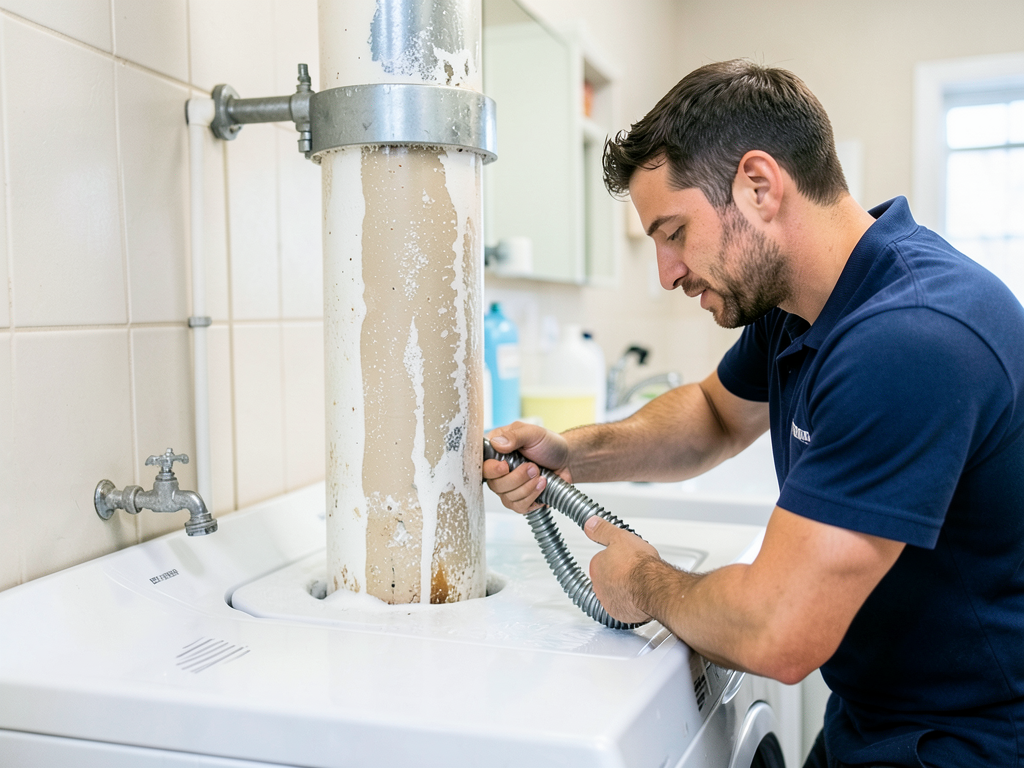
Image: Technician using a drain snake to clear a clogged washing machine standpipe in a Midwest City laundry room. The standpipe shows visible soap scum buildup and mineral deposits from hard water.
Our Professional Drain Clearing & Repair Process
When you call (405) 507-3533 for a washing machine drain emergency in Midwest City, here’s exactly what happens. Our service vehicles are equipped with industrial-grade drain cleaning tools specifically sized for laundry applications. We arrive within 60 minutes for most calls in the 73110 area and begin with a quick visual inspection of your laundry room setup. Industrial Pipe Repair.
First, we check the standpipe height and diameter. Most Midwest City homes built before 2000 have undersized 1.5-inch pipes instead of the current 2-inch standard. We measure the air gap between the standpipe top and washer drain hose—this should be at least 30 inches to prevent siphoning. If the standpipe is too short or narrow, we’ll recommend an upgrade to prevent future overflows.
Next comes the actual clearing process. For simple lint clogs, we use a handheld drain auger that reaches 25 feet into the pipe. For tougher blockages, we bring in motorized drain snakes with cutting heads that can break through soap scum and mineral scale. The entire process typically takes 45-90 minutes depending on blockage severity. Clearing Stubborn Clogs With Professional Drain Cleaning in Nichols Hills.
If the problem extends beyond the standpipe, we perform a sewer camera inspection. Our waterproof camera travels through your drain lines, showing real-time video of any cracks, offsets, or root intrusions. This diagnostic step is crucial because Midwest City’s older neighborhoods often have clay pipes that separate at the joints over decades of Oklahoma’s freeze-thaw cycles. EPA WaterSense guidelines for washing machines.
Once we identify the problem, we provide upfront pricing before any work begins. Most standpipe cleanings cost between $150-300, while main line clearing ranges from $300-600. We never charge extra for emergency weekend or evening calls in Midwest City.
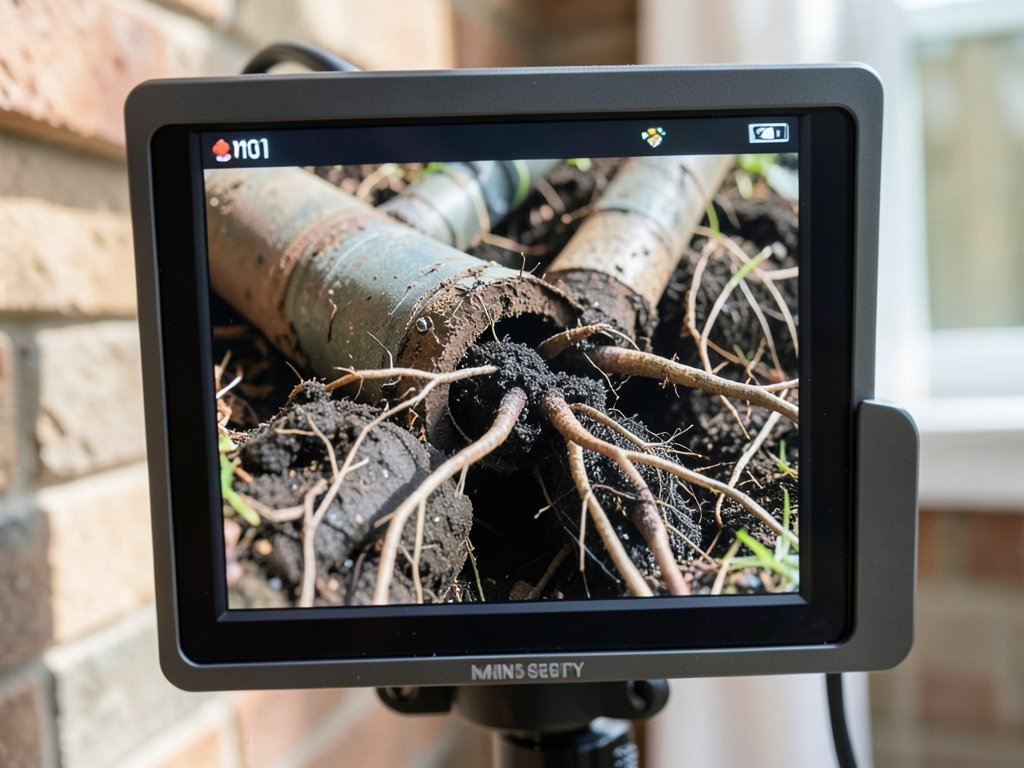
Image: Close-up of a sewer camera monitor showing tree roots growing through a clay pipe joint in a Midwest City home’s main sewer line. The roots appear as dark, fibrous masses blocking water flow.
Signs Your Washing Machine Drain Needs Professional Attention
Not every slow drain requires emergency service, but certain warning signs indicate you need professional help before a major flood occurs. Here’s how to diagnose your situation using simple observations from your laundry room.
Water backs up during the drain cycle. If you see water bubbling up in your utility sink, floor drain, or even the toilet when the washer drains, that’s a clear sign of a main line blockage. This happens because the sudden rush of 20-40 gallons from the washer overwhelms a restricted pipe.
Gurgling sounds from drains. When you hear glugging or bubbling noises from your sink or tub while the washer runs, it means air is trapped in the pipes. This indicates a partial blockage that’s getting worse. The sound is caused by water forcing air past the obstruction.
Slow draining over time. If your washer used to drain in 2-3 minutes but now takes 5-10 minutes, you have a developing clog. This gradual change is common in Midwest City homes where hard water minerals accumulate on pipe walls, reducing diameter by up to 50% over 15-20 years.
Standing water in the standpipe. After the washer finishes, if you see water remaining in the vertical pipe behind it, that’s abnormal. A properly functioning drain should be completely empty within 30 seconds of the cycle ending.
Foul odors from drains. Sewage smells or musty odors from your laundry room indicate organic matter is decomposing in your pipes. In Midwest City’s humid climate, this can lead to mold growth within the drain system itself.
Why Midwest City Homes Are Prone to Laundry Drain Issues
Midwest City’s unique combination of factors makes laundry room flooding more common here than in newer suburbs. Understanding these local conditions helps explain why your neighbor’s house might have recurring issues while yours stays clear.
Soil Composition: Oklahoma’s red clay soil expands when wet and contracts when dry, creating movement that breaks pipe seals over time. This is especially problematic for homes in the Ridgecrest area where the clay layer sits just 12-18 inches below the surface. The constant shifting opens tiny gaps in pipe joints that catch debris.
Water Hardness: Midwest City’s municipal water supply has a hardness level of 12-15 grains per gallon, which is considered very hard. This means every wash cycle adds mineral deposits to your drain pipes. Over a year, a family of four can deposit up to 40 pounds of calcium and magnesium scale in their plumbing system.
Tree Root Intrusion: Many Midwest City neighborhoods were developed in the 1960s-1980s when fast-growing trees like silver maple and elm were popular landscaping choices. These species have aggressive root systems that seek out moisture in sewer lines. Roots can enter through tiny cracks and grow into massive blockages within 3-5 years.
Older Construction Standards: Homes built before 2000 often have 1.5-inch drain pipes instead of the current 2-inch standard. They also frequently lack proper P-traps or cleanouts, making maintenance difficult. The 1999 Oklahoma Uniform Building Code update finally mandated these improvements, but many existing homes still have the old systems.
Climate Factors: Midwest City’s temperature swings from summer highs of 95°F to winter lows of 25°F cause pipe materials to expand and contract. This thermal cycling weakens joints and creates microscopic cracks that catch debris. The area’s average 38 inches of annual rainfall also means more water moving through your drainage system, increasing pressure on any restrictions.
Emergency Response for Midwest City Residents
When your washing machine drain overflows, every minute counts. Water spreads quickly across flooring and can seep into wall cavities within 30 minutes. Our emergency response protocol is designed specifically for Midwest City’s layout and common housing types.
Response Time: We guarantee arrival within 60 minutes for most Midwest City locations, including the Heritage Park area near Tinker Air Force Base. Our dispatch center tracks real-time traffic and can reroute technicians around construction on SE 29th Street or delays near I-40.
Equipment Staging: Our service vehicles carry Midwest City-specific inventory. We stock 2-inch PVC couplings, P-traps, and cleanout adapters that fit the most common configurations in local homes. This means we can often complete repairs in a single visit without waiting for parts.
Damage Assessment: Upon arrival, we use moisture meters to check wall cavities and subflooring for water intrusion. This is critical in Midwest City’s pier-and-beam homes where water can collect underneath and cause structural damage before it’s visible upstairs.
Insurance Documentation: We provide detailed written reports with photos that your insurance company will accept. This includes moisture readings, cause of failure, and recommended repairs. Many Midwest City homeowners discover their insurance covers drain cleaning if it prevents water damage.
Follow-up Service: After emergency clearing, we schedule a follow-up inspection in 30 days to ensure the repair held. This is especially important for Midwest City homes where soil conditions might cause new issues to develop quickly.
Preventing Future Laundry Room Floods
After we resolve your immediate overflow emergency, taking preventive measures can save you from future headaches. These steps are particularly important for Midwest City homes given our local conditions.
Install a Lint Trap: A simple mesh filter on your washer’s drain hose catches 95% of lint before it enters your pipes. Clean it monthly to maintain proper water flow. This is especially effective in Midwest City where lint combines with hard water minerals to form stubborn clogs.
Monthly Maintenance: Pour a gallon of hot water mixed with 1/2 cup baking soda down your standpipe once a month. This helps dissolve soap scum and mineral buildup. Follow with cold water to flush the system. This simple habit can extend your drain life by years.
Upgrade Old Pipes: If your home is over 20 years old, consider replacing 1.5-inch drain pipes with 2-inch PVC. The extra diameter handles the high-volume discharge from modern HE washers much better. This upgrade costs $300-500 but prevents countless future emergencies.
Install a Drain Pan: A plastic pan under your washer catches small leaks and overflows before they damage flooring. For Midwest City’s pier-and-beam homes, this also prevents water from collecting under the house where it can cause foundation issues.
Consider Hydro-Jetting: Every 2-3 years, have your main sewer line professionally cleaned with high-pressure water jetting. This removes scale, grease, and early root intrusions before they cause blockages. The cost of $400-600 is far less than emergency water damage repairs.
Monitor Water Pressure: High water pressure (over 80 psi) stresses your entire plumbing system. Midwest City homes should have a pressure gauge on the main line. If pressure exceeds 80 psi, install a pressure-reducing valve to protect your pipes.
Cost Factors for Washing Machine Drain Repair in Midwest City
Understanding what affects repair costs helps you budget and avoid surprises. Here’s what determines the final price for drain services in the Midwest City area.
| Service Type | Average Cost Midwest City | Time Required | Best For |
|---|---|---|---|
| Standpipe Snaking | $150-300 | 45-90 minutes | Lint/soap scum clogs |
| Main Line Clearing | $300-600 | 2-4 hours | Root blockages, main line clogs |
| Camera Inspection | $200-350 | 30-60 minutes | Diagnosing unknown issues |
| Pipe Replacement | $800-2,500 | 4-8 hours | Severe damage, upgrades |
Accessibility: Laundry rooms in Midwest City’s split-level homes or those with finished basements often require more labor to access drain lines. Expect a 20-30% cost increase for difficult-to-reach pipes.
Time of Service: Emergency calls during nights, weekends, or holidays carry a 25-50% premium. However, this is often worth it to prevent extensive water damage that could cost thousands in repairs.
Material Quality: We use commercial-grade PVC and copper fittings that meet or exceed Oklahoma plumbing codes. While slightly more expensive upfront, these materials prevent repeat failures common with cheaper alternatives.
Permits and Inspections: Major drain line replacements in Midwest City require permits from the city building department. We handle all permitting and schedule required inspections, ensuring your repair meets current code requirements.
Insurance Coverage: Many Midwest City homeowners’ policies cover drain cleaning if it prevents water damage. We can provide the documentation your insurance company needs to process claims quickly.
Frequently Asked Questions
Why does my washing machine drain overflow only during the rinse cycle?
The rinse cycle uses the most water—typically 20-30 gallons in just 2-3 minutes. If your drain line has any restriction, this sudden volume surge overwhelms it. The wash cycle uses less water over a longer period, so the restriction isn’t as noticeable. This pattern strongly suggests a partial blockage in your standpipe or main line that needs professional clearing.
Can I use chemical drain cleaners for my washing machine backup?
We strongly advise against chemical drain cleaners for washing machine drains. These products contain caustic chemicals that can damage your pipes, especially older metal ones common in Midwest City homes. They also create heat that can warp PVC pipes. More importantly, if the chemicals don’t clear the clog, you’ll have standing water filled with hazardous substances that makes mechanical cleaning dangerous for technicians.
How long does a washing machine drain cleaning take?
Simple standpipe clogs typically take 45-90 minutes from arrival to completion. Main line blockages requiring camera inspection and snaking can take 2-4 hours. Complete pipe replacements usually require 4-8 hours. We always provide accurate time estimates before starting work and keep you updated throughout the process.
Will my homeowner’s insurance cover washing machine drain repairs?
Standard policies usually cover water damage from drain backups but not the drain cleaning itself. However, if we can show that cleaning prevented extensive damage, many insurers will cover the service. We provide detailed documentation and can work directly with your insurance company to maximize your coverage.
How can I tell if the problem is my washing machine or the drain?
Test by running water from your utility sink down the standpipe. If it backs up immediately, the drain is clogged. If it drains fine, the problem might be your washer’s drain pump. Also, check if other fixtures (toilet, shower) show similar symptoms. Multiple affected fixtures indicate a main line issue rather than an appliance problem.
Image: Technician holding a sewer camera monitor showing clear drain pipe walls after hydro-jetting service. The before-and-after comparison demonstrates the complete removal of scale and debris buildup.
Don’t Let a Small Problem Become a Big Disaster
A washing machine drain overflow might seem like a minor inconvenience, but in Midwest City’s older homes, it’s often a warning sign of bigger plumbing issues. The combination of hard water, clay soil movement, and aging pipes creates perfect conditions for recurring backups. What starts as a slow drain can quickly escalate to a flooded laundry room causing thousands in water damage. Plumbing Edmond.
Our team has served Midwest City homeowners for over 15 years, handling everything from simple standpipe clogs to complete main line replacements. We understand the unique challenges of local soil conditions, water quality, and home construction patterns. When you call (405) 507-3533, you’re getting a technician who knows exactly what to expect in your neighborhood. Why Edmond Homeowners Should Invest in a Whole House Water Softener.
Don’t wait until water is pouring across your floor. If you notice slow draining, gurgling sounds, or water backing up during the wash cycle, call us immediately. We’ll diagnose the problem, clear the blockage, and recommend preventive measures to keep your laundry room dry. Our 24/7 emergency service means we’re always ready when you need us most.
Pick up the phone and call (405) 507-3533 today to schedule your inspection or emergency service. Your laundry room—and your peace of mind—will thank you. For more information, visit IICRC S500 water damage restoration standards.
{
“@context”: “https://schema.org”,
“@type”: “BlogPosting”,
“headline”: “What to Do When Your Washing Machine Drain Overflows in Midwest City”,
“description”: “Washing machine flooding your Midwest City laundry room? Learn the causes, emergency steps, and when to call for professional drain repair. Fast 24/7 service available.”,
“wordCount”: 2739,
“datePublished”: “2026-04-17T09:27:00.000Z”,
“dateModified”: “2026-04-17T09:27:00.000Z”,
“inLanguage”: “en-US”,
“mainEntityOfPage”: {
“@type”: “WebPage”,
“@id”: “https://atlasplumbingoklahomacity.com”
},
“publisher”: {
“@type”: “LocalBusiness”,
“name”: “Atlas Plumbing Oklahoma City”,
“url”: “https://atlasplumbingoklahomacity.com”
},
“author”: {
“@type”: “Organization”,
“name”: “Atlas Plumbing Oklahoma City”,
“url”: “https://atlasplumbingoklahomacity.com”
},
“image”: {
“@type”: “ImageObject”,
“url”: “https://atlasplumbingoklahomacity.com/wp-content/uploads/2026/03/what-to-do-when-your-washing-machine-drain-overflo-1.png”
}
}
{
“@context”: “https://schema.org”,
“@type”: “Plumber”,
“name”: “Atlas Plumbing Oklahoma City”,
“url”: “https://atlasplumbingoklahomacity.com”,
“address”: {
“@type”: “PostalAddress”,
“addressLocality”: “Oklahoma City”
},
“areaServed”: {
“@type”: “City”,
“name”: “Oklahoma City”
}
}
{
“@context”: “https://schema.org”,
“@type”: “FAQPage”,
“mainEntity”: [
{
“@type”: “Question”,
“name”: “Why does my washing machine drain overflow only during the rinse cycle?”,
“acceptedAnswer”: {
“@type”: “Answer”,
“text”: “The rinse cycle uses the most water—typically 20-30 gallons in just 2-3 minutes. If your drain line has any restriction, this sudden volume surge overwhelms it. The wash cycle uses less water over a longer period, so the restriction isn’t as noticeable. This pattern strongly suggests a partial blockage in your standpipe or main line that needs professional clearing.”
}
},
{
“@type”: “Question”,
“name”: “Can I use chemical drain cleaners for my washing machine backup?”,
“acceptedAnswer”: {
“@type”: “Answer”,
“text”: “We strongly advise against chemical drain cleaners for washing machine drains. These products contain caustic chemicals that can damage your pipes, especially older metal ones common in Midwest City homes. They also create heat that can warp PVC pipes. More importantly, if the chemicals don’t clear the clog, you’ll have standing water filled with hazardous substances that makes mechanical cleaning dangerous for technicians.”
}
},
{
“@type”: “Question”,
“name”: “How long does a washing machine drain cleaning take?”,
“acceptedAnswer”: {
“@type”: “Answer”,
“text”: “Simple standpipe clogs typically take 45-90 minutes from arrival to completion. Main line blockages requiring camera inspection and snaking can take 2-4 hours. Complete pipe replacements usually require 4-8 hours. We always provide accurate time estimates before starting work and keep you updated throughout the process.”
}
},
{
“@type”: “Question”,
“name”: “Will my homeowner’s insurance cover washing machine drain repairs?”,
“acceptedAnswer”: {
“@type”: “Answer”,
“text”: “Standard policies usually cover water damage from drain backups but not the drain cleaning itself. However, if we can show that cleaning prevented extensive damage, many insurers will cover the service. We provide detailed documentation and can work directly with your insurance company to maximize your coverage.”
}
},
{
“@type”: “Question”,
“name”: “How can I tell if the problem is my washing machine or the drain?”,
“acceptedAnswer”: {
“@type”: “Answer”,
“text”: “Test by running water from your utility sink down the standpipe. If it backs up immediately, the drain is clogged. If it drains fine, the problem might be your washer’s drain pump. Also, check if other fixtures (toilet, shower) show similar symptoms. Multiple affected fixtures indicate a main line issue rather than an appliance problem.”
}
}
]
}
{
“@context”: “https://schema.org”,
“@type”: “BreadcrumbList”,
“itemListElement”: [
{
“@type”: “ListItem”,
“position”: 1,
“name”: “Home”,
“item”: “https://atlasplumbingoklahomacity.com”
},
{
“@type”: “ListItem”,
“position”: 2,
“name”: “Blog”,
“item”: “https://atlasplumbingoklahomacity.com/blog”
},
{
“@type”: “ListItem”,
“position”: 3,
“name”: “What to Do When Your Washing Machine Drain Overflows in Midwest City”
}
]
}
{
“@context”: “https://schema.org”,
“@type”: “Service”,
“serviceType”: “Plumbing”,
“provider”: {
“@type”: “LocalBusiness”,
“name”: “Atlas Plumbing Oklahoma City”,
“url”: “https://atlasplumbingoklahomacity.com”
},
“areaServed”: {
“@type”: “City”,
“name”: “Oklahoma City”
},
“description”: “Washing machine flooding your Midwest City laundry room? Learn the causes, emergency steps, and when to call for professional drain repair. Fast 24/7 service available.”
}