Important Plumbing Considerations for Your New Pool House in Gaillardia
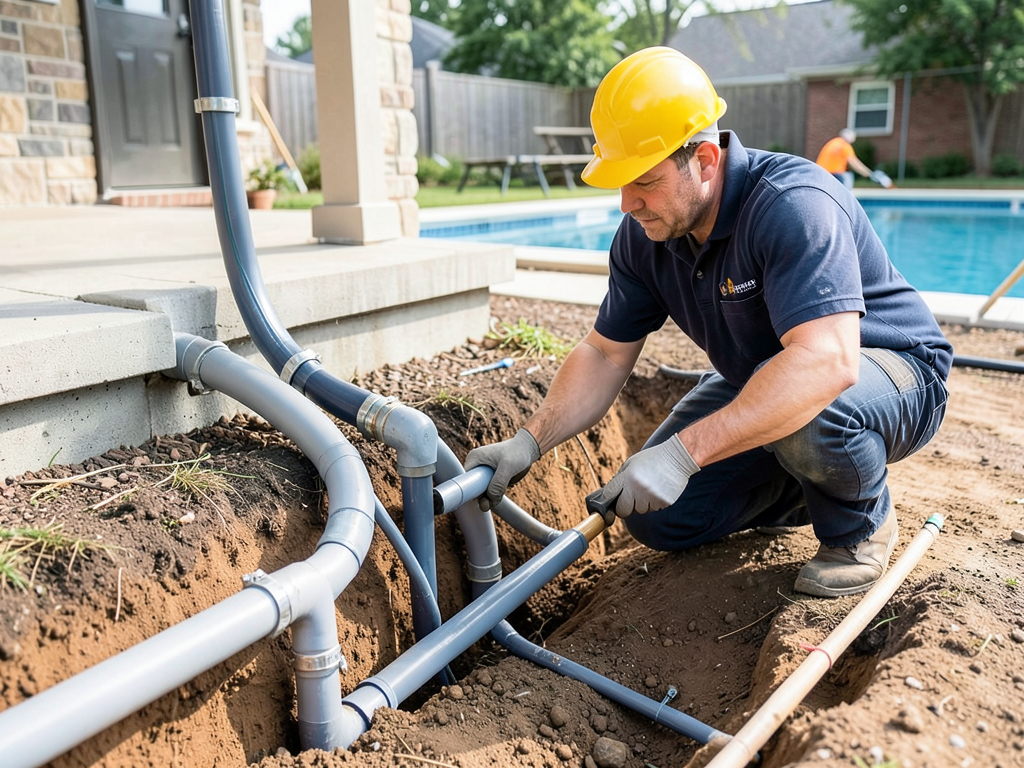
Building a pool house in Gaillardia requires careful planning of water lines, sewer connections, and drainage systems to handle Oklahoma’s extreme weather. The clay-heavy soil in this Oklahoma City neighborhood expands and contracts dramatically with moisture changes, creating unique challenges for underground plumbing. Before breaking ground, you need to understand local building codes, frost line depths, and the specific requirements for outdoor bathroom and kitchen plumbing. City of Oklahoma City Building Code.
Gaillardia’s luxury estates often sit on expansive lots where pool houses can be 50 to 100 feet from the main residence. This distance affects everything from water pressure to trenching depth. Oklahoma City requires all underground water lines to be buried at least 18 inches deep to prevent freezing, but many Gaillardia properties need deeper trenches due to soil composition and elevation changes. The Oklahoma Uniform Building Code Commission mandates specific backflow prevention devices when connecting outdoor plumbing to your home’s main water supply. Oklahoma Uniform Building Code Commission.
Winter temperatures in Oklahoma City frequently drop below 20°F, causing standing water in outdoor pipes to freeze and burst. A properly designed pool house plumbing system includes dedicated shut-off valves, frost-proof hose bibs, and drainage points that allow you to completely evacuate water from lines before the first freeze. Many Gaillardia homeowners also install tankless water heaters near outdoor showers and wet bars to provide instant hot water without long waits or heat loss through extended pipe runs. How to Tell if Your Oklahoma City Home Has a Slab Leak Under the Foundation.
The City of Oklahoma City requires plumbing permits for all new pool house installations, including separate permits for water, sewer, and gas lines if applicable. These permits ensure your system meets minimum standards for pipe sizing, ventilation, and fixture placement. Working with a licensed Oklahoma plumber who understands local requirements can prevent costly mistakes and delays during inspection phases. Need a Plumber Right Now in Edmond? We Handle Burst Pipes and Clogs Fast.
Essential Plumbing Systems for Your Gaillardia Pool House
A functional pool house needs reliable plumbing for multiple purposes. The most common setups include outdoor showers for rinsing off chlorine, a half-bath for guests, a small kitchen or wet bar for entertaining, and connections for pool equipment like pumps and heaters. Each fixture requires proper water supply lines, drainage, and ventilation to prevent backups and ensure code compliance. Plumbing Edmond.
Water supply lines in pool houses typically use PEX piping for its flexibility and freeze resistance, though copper remains popular for its durability and traditional appearance. PEX expands slightly when frozen, reducing the risk of burst pipes compared to rigid copper. However, copper handles Oklahoma’s high summer temperatures better and resists UV damage when properly insulated. The choice between materials affects both installation costs and long-term maintenance requirements.
Drainage systems must handle everything from shower runoff to kitchen sink waste. Outdoor showers require proper sloping to prevent standing water and typically connect to the main sewer line through a dedicated cleanout. Kitchenettes need grease traps if you plan to install a sink, and all drains must maintain proper air gaps to prevent sewer gases from entering the pool house. The Oklahoma City Plumbing Code requires a minimum 1.5-inch drain line for most fixtures, with larger 2-inch lines for showers and floor drains.. Read more about Why You Need a Professional to Blow Out Your Irrigation System in Edmond.
Gas lines for pool heaters, outdoor kitchens, or tankless water heaters require special consideration. Oklahoma law mandates that all gas line installations be performed by licensed professionals with proper pressure testing and leak detection. Flexible corrugated stainless steel tubing (CSST) offers easier installation around obstacles but requires specific bonding and grounding to prevent lightning damage. Traditional black iron pipe provides maximum durability but demands precise cutting and threading during installation.
Backflow prevention devices protect your home’s drinking water from contamination when connecting outdoor plumbing. Oklahoma City requires reduced pressure zone (RPZ) assemblies for systems with chemical injection, like pool equipment, and double-check valve assemblies for standard outdoor fixtures. These devices must be tested annually by certified technicians to maintain compliance with local health department regulations.. Read more about Planning the Plumbing for a New Backyard ADU or Guest Cottage in Midtown.
Winterization Strategies for Oklahoma Pool House Plumbing
Oklahoma’s freeze-thaw cycles create the most significant threat to pool house plumbing systems. When temperatures drop below freezing, any water remaining in pipes expands and can crack fittings, split pipes, and destroy fixtures. The clay soil in Gaillardia holds moisture that freezes and expands, putting additional pressure on underground lines. Proper winterization requires more than just draining lines; it demands a comprehensive approach to protecting every component.. Read more about Essential Plumbing Winterization for Your Lake Overholser Vacation Property.
Start with a dedicated shut-off valve located where the main water line enters the pool house. This valve should be easily accessible and clearly marked for quick operation during cold snaps. After shutting off the water supply, open all fixtures to allow complete drainage. Remove and store aerators, showerheads, and other removable components indoors. Use compressed air to blow out remaining water from supply lines, especially in low spots where water naturally collects.. Read more about Why You Should Get a Sewer Camera Inspection Before Any Major Backyard Project in Nichols Hills.
Outdoor showers need special attention because they often have hidden p-traps that retain water. Pour RV antifreeze into shower drains and floor drains to prevent freezing in the p-trap. Do not use automotive antifreeze, as it contains toxic chemicals that can contaminate groundwater. For pool houses with bathrooms, flush toilets to remove as much water as possible, then add a small amount of RV antifreeze to the bowl and tank to protect the porcelain and internal mechanisms.
Insulation plays a crucial role in protecting exposed pipes and fixtures. Foam pipe insulation works well for supply lines, but in Oklahoma’s climate, you need insulation rated for both heat and cold. Self-sealing insulation tubes prevent moisture intrusion that can lead to mold growth. For pipes in unheated crawl spaces or exterior walls, consider heat tape with thermostatic control that activates only when temperatures approach freezing.
Consider installing a small electric heater with a thermostat in the pool house during winter months. This provides just enough warmth to prevent freezing without the cost of fully heating the space. Some homeowners use smart thermostats that can be controlled remotely, allowing them to monitor and adjust temperatures during unexpected cold snaps. The initial investment in winterization equipment often pays for itself by preventing a single frozen pipe incident. Why Edmond Homeowners Should Invest in a Whole House Water Softener.
Permitting and Code Compliance in Oklahoma City
Building a pool house in Gaillardia requires navigating Oklahoma City’s permitting process for accessory structures. The City of Oklahoma City Building Code treats pool houses as detached structures, requiring separate permits for electrical, plumbing, and mechanical systems. The Oklahoma Uniform Building Code Commission establishes minimum standards that all work must meet, but local amendments can add specific requirements for the Oklahoma City area.
Plumbing permits require detailed plans showing fixture locations, pipe routing, and connection points to existing utilities. The plans must specify pipe materials, sizes, and fittings to ensure compliance with the International Plumbing Code as adopted by Oklahoma. A licensed plumber must sign and seal these plans before submission. The permitting process typically takes 2 to 4 weeks, depending on the complexity of your project and current workload at the permit office.
Inspections occur at multiple stages of construction. Rough-in inspections verify that all pipes are properly installed before walls are closed up. This includes checking support spacing, slope for drainage pipes, and proper installation of vents and cleanouts. Final inspections ensure all fixtures are correctly connected and functioning. Missing inspections can result in stop-work orders and costly delays, so schedule them well in advance.
Oklahoma City requires specific backflow prevention devices based on the type of connection to your home’s water supply. For standard outdoor fixtures like sinks and showers, a double-check valve assembly suffices. However, if your pool house includes pool equipment with chemical injection or irrigation systems, you need a reduced pressure zone assembly. These devices must be tested by certified testers within 30 days of installation and annually thereafter.
Sewer connections for pool houses follow strict guidelines to prevent contamination and backups. Oklahoma City Municipal Code requires all wastewater to connect to the municipal sewer system or an approved septic system. Greywater from showers and sinks cannot be discharged onto the ground surface, even for irrigation. The code specifies minimum pipe sizes and slopes to ensure proper flow, typically requiring a 2% minimum slope for horizontal drainage pipes.
Insurance considerations also factor into your pool house planning. Most homeowner’s policies cover detached structures, but the addition of plumbing and electrical systems may affect your coverage limits and premiums. Some insurance companies require specific safety features like GFCI protection for all outdoor outlets and anti-scald devices on shower valves. Check with your insurance provider before finalizing your pool house design to avoid coverage gaps.
Cost Factors and Budget Planning
Plumbing costs for a pool house in Gaillardia vary significantly based on distance from the main residence, soil conditions, and the complexity of your design. The most substantial expense is often trenching for water and sewer lines, which can cost $8 to $15 per linear foot in Oklahoma City, depending on soil conditions and obstacles like tree roots or existing utilities. Clay soil in Gaillardia requires wider trenches and more frequent pipe supports, increasing labor costs.
Fixture selection dramatically affects your budget. Basic outdoor showers with cold water only might cost $500 to $800 installed, while full shower systems with hot water, multiple heads, and luxury features can exceed $3,000. Bathroom installations range from $2,500 for a simple half-bath to $8,000 or more for a complete bathroom with tile, ventilation, and luxury fixtures. Kitchenettes with sinks, refrigerators, and small appliances typically cost $3,000 to $6,000 for plumbing alone.. Read more about Why Adding a Pot Filler Might Be the Best Kitchen Upgrade for Your Edmond Home.
Material choices impact both initial costs and long-term maintenance. PEX piping costs about 40% less than copper but may not provide the same aesthetic appeal for exposed applications. Copper prices fluctuate with commodity markets, sometimes making PEX the more economical choice even for high-end installations. However, copper’s longevity and resistance to UV damage can make it more cost-effective over a 20 to 30-year period.
Professional installation versus DIY affects your overall costs and warranty coverage. Licensed plumbers charge $75 to $150 per hour in the Oklahoma City area, with most pool house installations requiring 20 to 40 hours of labor. While DIY installation might save on labor costs, mistakes can lead to leaks, code violations, and expensive repairs. Many manufacturers void warranties if their products are not installed by licensed professionals. Industrial Pipe Repair.
Consider future expansion when planning your plumbing system. Installing larger pipe sizes than immediately necessary allows for easy upgrades later. For example, running a 1-inch water line instead of the minimum 3/4-inch required for a single shower provides capacity for additional fixtures without major rework. Similarly, installing extra electrical circuits during initial construction costs much less than adding them later.
Maintenance costs should factor into your budget planning. Outdoor plumbing systems require regular inspections, especially after Oklahoma’s severe weather events. Budget $200 to $500 annually for professional maintenance, including backflow preventer testing, winterization services, and inspection of exposed pipes and fixtures. This preventive approach often prevents costly emergency repairs during peak usage seasons.
Common Mistakes to Avoid
Many pool house plumbing projects in Oklahoma City fail due to inadequate planning for local conditions. One frequent mistake is underestimating the impact of expansive clay soil on underground pipes. As clay absorbs water and expands, it can shift pipes out of alignment, causing leaks and drainage problems. Using flexible connectors and proper pipe supports helps mitigate this issue, but many DIY installers skip these critical steps to save money.
Another common error involves improper pipe sizing for the distance from the main house. Water pressure decreases with distance and elevation changes, potentially resulting in weak flow at distant fixtures. A pool house 100 feet from the main residence might need a 1-inch supply line instead of the standard 3/4-inch to maintain adequate pressure. Calculating pressure loss based on your specific layout prevents disappointing performance after installation.
Neglecting proper ventilation causes serious problems in pool house plumbing systems. Every drain needs a vent pipe to allow air into the system and prevent vacuum formation that can siphon water from traps. Without proper venting, you might experience slow drainage, gurgling sounds, and sewer gas odors. Oklahoma City code requires vents to extend through the roof or connect to the main house’s vent system, but some installers try to shortcut this requirement.
Winterization failures often result from incomplete drainage procedures. Simply opening valves does not guarantee all water is removed from low spots in the pipes. Water can remain trapped in fittings, valve bodies, and horizontal pipe runs, creating freeze points. Using compressed air to blow out lines and removing hose bibs for indoor storage prevents many freeze-related failures. However, these steps require time and proper equipment that many homeowners lack.
Electrical and plumbing coordination problems frequently arise when different contractors work independently. Water lines need proper clearance from electrical panels and wiring, and specific bonding requirements exist for gas lines near water pipes. Without coordinated planning, you might discover conflicts during construction that require costly rework. Having a single project manager or general contractor oversee all trades prevents these coordination issues.
Ignoring local code requirements leads to failed inspections and costly modifications. Oklahoma City has specific requirements for fixture spacing, pipe supports, and drainage slopes that differ from national standards. For example, the city requires 12-inch on-center support spacing for horizontal drain pipes, while some national codes allow 4-foot spacing. These local variations can cause inspection failures even when work meets general industry standards.
Choosing the Right Plumbing Contractor
Selecting a qualified plumbing contractor for your Gaillardia pool house requires more than checking basic licensing. Oklahoma requires all plumbers to hold a state license, but experience with pool house installations and local code knowledge proves equally important. Ask potential contractors about their experience with similar projects in the Oklahoma City area and request references from recent pool house installations.
Verify the contractor’s Oklahoma Construction Industries Board (CIB) license status and insurance coverage. The CIB maintains an online license verification system where you can confirm active status and check for any disciplinary actions. Insurance should include general liability coverage of at least $500,000 and workers’ compensation for all employees. Request certificates of insurance and verify coverage directly with the insurance provider.
Local knowledge provides significant advantages when building in Gaillardia. Contractors familiar with the area understand the specific soil conditions, frost line depths, and common installation challenges unique to this Oklahoma City neighborhood. They know which suppliers stock materials suitable for local conditions and can anticipate problems before they arise. This experience often translates to faster completion times and fewer costly surprises during construction.
Communication skills and project management capabilities matter as much as technical expertise. A good contractor provides detailed written estimates, explains the work process clearly, and maintains regular communication throughout the project. They should be able to coordinate with other tradespeople, obtain necessary permits, and schedule inspections without constant supervision. Poor communication often leads to misunderstandings about scope, timeline, and budget.
Ask about warranty coverage and post-installation support. Quality contractors stand behind their work with written warranties covering both materials and labor. A typical warranty might cover 1 year for labor and match manufacturer warranties for materials, which often extend to 10 or 20 years for major components. Also inquire about emergency service availability and response times for issues that arise after project completion.
Price comparison requires careful evaluation of what each estimate includes. The lowest bid might exclude important items like permit fees, inspection costs, or necessary materials. Request detailed line-item estimates that break down costs for labor, materials, permits, and overhead. This transparency allows you to compare apples to apples and understand where you might save money without compromising quality.
Maintenance and Long-Term Care
Regular maintenance keeps your pool house plumbing system functioning efficiently and prevents costly emergency repairs. Oklahoma’s climate creates unique maintenance challenges, from summer heat expanding pipes to winter freezes causing cracks. Establish a maintenance schedule that addresses both seasonal changes and annual inspections to protect your investment.
Spring maintenance should include checking for winter damage, testing all fixtures, and inspecting visible pipes for leaks or corrosion. Turn on the water supply slowly and check for any immediate leaks at connections and fixtures. Test water pressure at multiple points to ensure adequate flow throughout the system. Inspect outdoor shower valves and hose bibs for proper operation and signs of freeze damage from winter.
Summer maintenance focuses on efficiency and performance. Clean showerheads and faucet aerators to remove mineral buildup from Oklahoma’s hard water. Check pool equipment connections for leaks, as summer usage puts maximum demand on the system. Inspect insulation on exposed pipes, replacing any damaged sections before winter. Test the operation of any water heaters or pumps to ensure they’re ready for peak season usage.
Fall preparation involves thorough winterization procedures. Schedule backflow preventer testing with a certified technician, as most Oklahoma City municipalities require annual testing. Drain and winterize all outdoor fixtures, even if you plan to use the pool house during mild winter days. Install freeze protection devices on critical components, and consider adding temperature sensors that alert you to freezing conditions in the pool house.
Annual professional inspections catch problems before they become emergencies. A qualified plumber should inspect your entire system, test water quality, check for hidden leaks using moisture detection equipment, and verify that all safety devices function properly. This inspection typically costs $150 to $300 but often identifies issues that would cost thousands to repair if left unaddressed.
Keep detailed records of all maintenance, repairs, and inspections. Document water pressure readings, fixture performance, and any issues that arise during different seasons. This information helps identify patterns that might indicate developing problems. Many homeowners create digital maintenance logs with photos and notes that prove valuable when troubleshooting issues or planning upgrades.
Future Trends and Upgrades
Pool house plumbing technology continues evolving, offering new options for efficiency and convenience. Smart water monitoring systems can detect leaks as small as one drop per minute and send alerts to your smartphone. These systems integrate with home automation platforms, allowing you to monitor water usage, control fixtures remotely, and receive automatic shut-off notifications when problems occur. Installation costs range from $300 for basic leak detectors to $2,000 for comprehensive monitoring systems.
Tankless water heaters for pool houses provide hot water on demand without the standby energy losses of traditional tanks. Modern units can supply multiple fixtures simultaneously and adjust output based on demand. Installation costs $800 to $2,500 depending on capacity and features, but operating costs are typically 20% to 30% lower than tank-style heaters. Some models include freeze protection and can be controlled via smartphone apps for maximum convenience.
Greywater recycling systems capture water from showers and sinks for landscape irrigation, reducing overall water consumption. While Oklahoma regulations limit greywater use, approved systems can provide significant water savings for pool house landscaping. Installation requires separate plumbing lines and filtration systems, with total costs ranging from $1,500 to $4,000 depending on complexity. These systems must comply with Oklahoma Department of Environmental Quality guidelines for greywater use.
Water quality improvement technology continues advancing, with new filtration and softening systems designed specifically for outdoor applications. Ultraviolet disinfection systems eliminate bacteria without chemicals, while advanced filtration removes sediments and improves water taste. These systems integrate with existing plumbing and typically cost $500 to $1,500 installed. For pool houses with outdoor kitchens, point-of-use filtration ensures high-quality water for drinking and cooking.
Climate change considerations influence pool house plumbing design, with many homeowners planning for more extreme weather patterns. This includes larger capacity drainage systems to handle increased rainfall, enhanced freeze protection for colder winters, and heat-resistant materials for hotter summers. Some designs incorporate rainwater harvesting systems that supplement pool filling and irrigation needs, reducing dependence on municipal water supplies.
Accessibility features gain importance as pool houses serve multiple generations. Anti-scald devices, lever-style faucet handles, and handheld shower sprayers improve usability for all ages. Some designs include barrier-free showers with linear drains that accommodate wheelchairs while maintaining attractive aesthetics. These features add $500 to $2,000 to installation costs but significantly improve functionality and safety.
Frequently Asked Questions
How deep should water lines be buried for a pool house in Oklahoma?
Oklahoma City requires a minimum 18-inch depth for water lines to prevent freezing, but many Gaillardia properties need 24 to 36 inches due to expansive clay soil and elevation changes. Deeper trenches provide better protection against Oklahoma’s freeze-thaw cycles and soil movement. Always check with the Oklahoma City permit office for specific requirements in your area.
Do I need a permit for pool house plumbing in Oklahoma City?
Yes, Oklahoma City requires separate permits for all plumbing work on pool houses, including water supply, drainage, and gas lines. The permitting process ensures compliance with the Oklahoma Uniform Building Code and local amendments. Permit fees vary based on project scope but typically range from $100 to $500 for residential pool house installations.
What’s the best pipe material for outdoor pool house plumbing?
PEX piping offers excellent freeze resistance and flexibility for pool house applications, expanding slightly when frozen to prevent burst pipes. Copper provides superior durability and handles Oklahoma’s high summer temperatures better than PEX. Many contractors use PEX for underground runs and copper for exposed applications where appearance matters. The choice depends on your budget, climate concerns, and aesthetic preferences.
How much does it cost to run plumbing to a pool house?
Plumbing costs for pool houses in Gaillardia typically range from $3,000 to $15,000, depending on distance from the main house, number of fixtures, and soil conditions. Trenching represents the largest expense at $8 to $15 per linear foot. A basic setup with outdoor shower and half-bath costs less than a full bathroom with kitchen and laundry facilities.
How do I winterize pool house plumbing in Oklahoma?
Complete winterization requires shutting off the main water supply, draining all lines, using compressed air to blow out remaining water, and adding RV antifreeze to traps and low spots. Remove and store aerators and showerheads indoors. Consider installing freeze protection devices and temperature sensors for added security during Oklahoma’s unpredictable winter weather.
Can I use my pool house plumbing during winter months?
Yes, but you need freeze protection measures including heat tape on exposed pipes, thermostatically controlled space heaters, and insulated enclosures around fixtures. Some homeowners install dedicated water heaters with freeze protection for winter use. Always maintain temperatures above freezing in any space with plumbing, and be prepared to drain the system during extreme cold snaps.
What backflow prevention is required for pool house plumbing?
Oklahoma City requires reduced pressure zone (RPZ) assemblies for systems with pool equipment or chemical injection, and double-check valve assemblies for standard outdoor fixtures. These devices prevent contaminated water from flowing back into your home’s drinking water supply. RPZ assemblies must be tested annually by certified technicians to maintain compliance with local health department regulations.
Conclusion
Building a pool house in Gaillardia requires careful attention to Oklahoma’s unique climate, soil conditions, and building codes. Success depends on proper planning for water supply, drainage, and winterization to protect your investment from the state’s extreme weather. Working with experienced local contractors who understand these challenges can prevent costly mistakes and ensure your pool house provides years of reliable service.
The right plumbing system combines durability, efficiency, and code compliance while meeting your specific needs for outdoor living and entertainment. Whether you’re planning a simple outdoor shower or a complete bathroom with kitchen facilities, understanding these considerations helps you make informed decisions throughout the planning and construction process. Remember that proper permits, professional installation, and regular maintenance form the foundation of a trouble-free pool house plumbing system.
Ready to start your pool house plumbing project? Call (405) 507-3533 today to schedule a consultation with our experienced team. We understand the unique challenges of building in Gaillardia and can help you design a system that works perfectly for your property and lifestyle. Don’t wait until summer heat arrives – plan your pool house plumbing now for a stress-free installation and years of outdoor enjoyment.
{
“@context”: “https://schema.org”,
“@type”: “BlogPosting”,
“headline”: “Important Plumbing Considerations for Your New Pool House in Gaillardia”,
“description”: “Building a pool house in Gaillardia? Learn critical plumbing requirements, Oklahoma City permit codes, winterization strategies, and drainage solutions for luxury outdoor living.”,
“wordCount”: 4038,
“datePublished”: “2026-05-04T06:59:00.000Z”,
“dateModified”: “2026-05-04T06:59:00.000Z”,
“inLanguage”: “en-US”,
“mainEntityOfPage”: {
“@type”: “WebPage”,
“@id”: “https://atlasplumbingoklahomacity.com”
},
“publisher”: {
“@type”: “LocalBusiness”,
“name”: “Atlas Plumbing Oklahoma City”,
“url”: “https://atlasplumbingoklahomacity.com”
},
“author”: {
“@type”: “Organization”,
“name”: “Atlas Plumbing Oklahoma City”,
“url”: “https://atlasplumbingoklahomacity.com”
},
“image”: {
“@type”: “ImageObject”,
“url”: “https://atlasplumbingoklahomacity.com/wp-content/uploads/2026/03/important-plumbing-considerations-for-your-new-poo-1.png”
}
}
{
“@context”: “https://schema.org”,
“@type”: “Plumber”,
“name”: “Atlas Plumbing Oklahoma City”,
“url”: “https://atlasplumbingoklahomacity.com”,
“address”: {
“@type”: “PostalAddress”,
“addressLocality”: “Oklahoma City”
},
“areaServed”: {
“@type”: “City”,
“name”: “Oklahoma City”
}
}
{
“@context”: “https://schema.org”,
“@type”: “FAQPage”,
“mainEntity”: [
{
“@type”: “Question”,
“name”: “How deep should water lines be buried for a pool house in Oklahoma?”,
“acceptedAnswer”: {
“@type”: “Answer”,
“text”: “Oklahoma City requires a minimum 18-inch depth for water lines to prevent freezing, but many Gaillardia properties need 24 to 36 inches due to expansive clay soil and elevation changes. Deeper trenches provide better protection against Oklahoma’s freeze-thaw cycles and soil movement. Always check with the Oklahoma City permit office for specific requirements in your area.”
}
},
{
“@type”: “Question”,
“name”: “Do I need a permit for pool house plumbing in Oklahoma City?”,
“acceptedAnswer”: {
“@type”: “Answer”,
“text”: “Yes, Oklahoma City requires separate permits for all plumbing work on pool houses, including water supply, drainage, and gas lines. The permitting process ensures compliance with the Oklahoma Uniform Building Code and local amendments. Permit fees vary based on project scope but typically range from $100 to $500 for residential pool house installations.”
}
},
{
“@type”: “Question”,
“name”: “What’s the best pipe material for outdoor pool house plumbing?”,
“acceptedAnswer”: {
“@type”: “Answer”,
“text”: “PEX piping offers excellent freeze resistance and flexibility for pool house applications, expanding slightly when frozen to prevent burst pipes. Copper provides superior durability and handles Oklahoma’s high summer temperatures better than PEX. Many contractors use PEX for underground runs and copper for exposed applications where appearance matters. The choice depends on your budget, climate concerns, and aesthetic preferences.”
}
},
{
“@type”: “Question”,
“name”: “How much does it cost to run plumbing to a pool house?”,
“acceptedAnswer”: {
“@type”: “Answer”,
“text”: “Plumbing costs for pool houses in Gaillardia typically range from $3,000 to $15,000, depending on distance from the main house, number of fixtures, and soil conditions. Trenching represents the largest expense at $8 to $15 per linear foot. A basic setup with outdoor shower and half-bath costs less than a full bathroom with kitchen and laundry facilities.”
}
},
{
“@type”: “Question”,
“name”: “How do I winterize pool house plumbing in Oklahoma?”,
“acceptedAnswer”: {
“@type”: “Answer”,
“text”: “Complete winterization requires shutting off the main water supply, draining all lines, using compressed air to blow out remaining water, and adding RV antifreeze to traps and low spots. Remove and store aerators and showerheads indoors. Consider installing freeze protection devices and temperature sensors for added security during Oklahoma’s unpredictable winter weather.”
}
},
{
“@type”: “Question”,
“name”: “Can I use my pool house plumbing during winter months?”,
“acceptedAnswer”: {
“@type”: “Answer”,
“text”: “Yes, but you need freeze protection measures including heat tape on exposed pipes, thermostatically controlled space heaters, and insulated enclosures around fixtures. Some homeowners install dedicated water heaters with freeze protection for winter use. Always maintain temperatures above freezing in any space with plumbing, and be prepared to drain the system during extreme cold snaps.”
}
},
{
“@type”: “Question”,
“name”: “What backflow prevention is required for pool house plumbing?”,
“acceptedAnswer”: {
“@type”: “Answer”,
“text”: “Oklahoma City requires reduced pressure zone (RPZ) assemblies for systems with pool equipment or chemical injection, and double-check valve assemblies for standard outdoor fixtures. These devices prevent contaminated water from flowing back into your home’s drinking water supply. RPZ assemblies must be tested annually by certified technicians to maintain compliance with local health department regulations.”
}
}
]
}
{
“@context”: “https://schema.org”,
“@type”: “BreadcrumbList”,
“itemListElement”: [
{
“@type”: “ListItem”,
“position”: 1,
“name”: “Home”,
“item”: “https://atlasplumbingoklahomacity.com”
},
{
“@type”: “ListItem”,
“position”: 2,
“name”: “Blog”,
“item”: “https://atlasplumbingoklahomacity.com/blog”
},
{
“@type”: “ListItem”,
“position”: 3,
“name”: “Important Plumbing Considerations for Your New Pool House in Gaillardia”
}
]
}
{
“@context”: “https://schema.org”,
“@type”: “Service”,
“serviceType”: “Plumbing”,
“provider”: {
“@type”: “LocalBusiness”,
“name”: “Atlas Plumbing Oklahoma City”,
“url”: “https://atlasplumbingoklahomacity.com”
},
“areaServed”: {
“@type”: “City”,
“name”: “Oklahoma City”
},
“description”: “Building a pool house in Gaillardia? Learn critical plumbing requirements, Oklahoma City permit codes, winterization strategies, and drainage solutions for luxury outdoor living.”
}