
How to Safely Unclog a Second Floor Toilet Without Causing a Ceiling Leak
A second floor toilet clog isn’t just inconvenient—it’s a ticking time bomb for your ceiling. When a toilet on the second floor overflows, gravity pushes water through the subfloor and into your first floor ceiling. In Oklahoma City homes, especially older ones in neighborhoods like Mesta Park or Heritage Hills, this can mean water damage to drywall, electrical fixtures, and even structural beams. This guide shows you how to stop the overflow fast, safely unclog the toilet, and know when to call an emergency plumber before you’re staring at a stained ceiling. Oklahoma Uniform Building Code Commission.
Stop the Water Before It Spills Over
The first 60 seconds matter most. When you see the water rising in a second floor toilet, don’t reach for the plunger yet. Instead:
- Remove the tank lid and lift the float arm to stop the fill valve from adding more water.
- Shut off the water supply by turning the valve behind the toilet clockwise. If the valve is stuck (common in older OKC homes with hard water buildup), use a wrench carefully to avoid breaking the pipe.
- Plug the bowl with a rag or towel to prevent sewer gases from entering your home.
Acting within 60 seconds can prevent hundreds of gallons from flooding your bathroom and leaking through to the first floor.
Why Second Floor Clogs Are More Dangerous Than First Floor Ones
Gravity creates hydrostatic pressure that pushes water through the path of least resistance. On a second floor, that path is often your ceiling. Oklahoma City’s older homes, particularly those built before 1980 in areas like The Village or Nichols Hills, often have cast iron drain stacks that corrode internally. When a clog forms, pressure builds until water finds a way out—usually through a wax ring seal or a cracked flange. How to Tell if Your Oklahoma City Home Has a Slab Leak Under the Foundation.
Warning signs of an imminent ceiling leak include:
- Gurgling sounds from the toilet when other fixtures drain
- Water seeping around the toilet base
- Musty odors coming from the ceiling below
- Visible moisture on the first floor ceiling near the toilet’s location above
If you notice any of these, the clog is already forcing water through compromised seals.
Safe DIY Methods for Second Floor Toilet Clogs
Using the wrong tools or too much force on an upper floor toilet can crack the porcelain or damage the flange, making leaks worse. Here’s the safe approach:
Step 1: The Right Plunger Technique
Not all plungers work for toilets. Use a flange plunger with an extended rubber flap that creates a better seal in the toilet trap. Position it at an angle to allow air to escape, then press down firmly and pull up sharply. Repeat 10-15 times. The goal is to create pressure changes that dislodge the clog without forcing water upward.
Step 2: Closet Auger for Deep Clogs
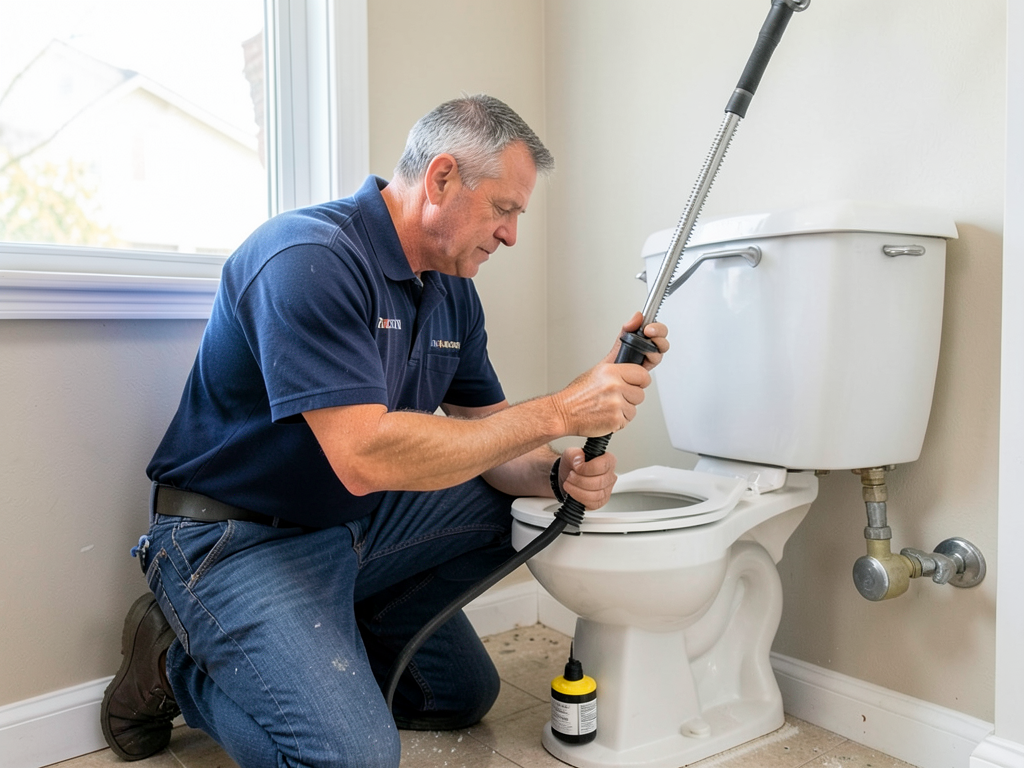
If plunging doesn’t work, use a closet auger (toilet snake). The key is gentle pressure—don’t force it. Feed the cable slowly into the toilet trap until you feel resistance. Crank the handle clockwise while maintaining steady pressure. When you feel the clog break free, retract the cable slowly to avoid scratching the porcelain.
Never use a standard drain snake on a toilet. The cable is too rigid and can crack the bowl or damage the flange bolts.
Step 3: Hot Water and Dish Soap
For partial clogs, pour a gallon of hot (not boiling) water mixed with a few tablespoons of dish soap into the bowl. Let it sit for 20-30 minutes. The soap lubricates the clog while the hot water softens it. This method works well for paper and waste clogs but won’t help with foreign objects or tree roots.
Is It the Toilet or the Main Stack?
Second floor clogs can be isolated to the toilet or indicate a bigger problem in the main soil stack. Here’s how to tell:
| Symptom | Isolated Toilet Clog | Main Stack Issue |
|---|---|---|
| Other fixtures affected? | No | Yes (sinks, tubs, other toilets) |
| Gurgling sounds? | Sometimes | Often, especially when flushing |
| Multiple clogs? | No | Yes, recurring in different fixtures |
| Age of home? | Any | Pre-1980 homes more likely |
Main stack issues require professional equipment like a sewer camera or hydro-jetting. In Oklahoma City, tree roots commonly invade clay sewer lines, especially in older neighborhoods with mature trees. Powerful Hydro Jetting to Blast Through Main Line Roots in Quail Springs.
Oklahoma City-Specific Plumbing Challenges
OKC’s municipal water contains high mineral content that creates scale buildup inside pipes. This narrows drain passages and makes clogs more frequent, particularly in homes built before 1990. The Oklahoma City Water Utilities Trust reports that water hardness in the metro area averages 9-12 grains per gallon, compared to the national average of 5-7.
Another local factor: Oklahoma’s expansive clay soil shifts seasonally. This movement can crack drain pipes or misalign toilet flanges, creating gaps where water can escape. Homes in areas like Moore or Mustang, built on clay-heavy soil, are especially vulnerable to these issues.
According to the Oklahoma Uniform Building Code Commission, toilet flanges must be secured with brass screws and sealed with an approved wax ring. However, many OKC homes built before the 2000s have corroded or missing flange components that fail under pressure.
When to Call an Emergency Plumber
DIY methods work for simple clogs, but certain signs mean you need professional help immediately:
- Water backing up into other fixtures when you flush
- Visible water damage on the ceiling below the toilet
- Persistent gurgling after multiple plunging attempts
- Cracks in the toilet base or floor around the toilet
- Sewer odors that don’t dissipate
Professional plumbers use specialized equipment like: Need a Plumber Right Now in Edmond? We Handle Burst Pipes and Clogs Fast.
- Sewer cameras to locate clogs deep in the stack
- Hydro-jetting to clear scale and root buildup
- Flange repair kits for damaged mounting hardware
- Moisture meters to detect hidden leaks in ceilings and walls
Emergency service in Oklahoma City typically arrives within 60-90 minutes for urgent calls. The cost ranges from $150-300 for basic clog removal, but ceiling water damage repairs can run $500-2,000 if addressed quickly.
Preventing Future Second Floor Toilet Disasters
Prevention is cheaper than emergency repairs. Here’s how to protect your second floor plumbing:
- Install a water alarm under the toilet to detect leaks early. These battery-powered devices cost under $20 and sound an alarm when they sense moisture.
- Check the flange bolts annually. Loose bolts allow the toilet to rock, breaking the wax seal over time.
- Replace old wax rings every 5-7 years, even if there’s no visible problem. The rubber degrades and becomes brittle.
- Install a pressure-reducing valve if your home’s water pressure exceeds 80 psi. High pressure stresses all plumbing connections.
- Schedule annual drain cleaning for homes over 20 years old, especially in areas with hard water.
For Oklahoma City homes, consider a whole-house water softener if you notice scale buildup on faucets or showerheads. This reduces mineral deposits that contribute to stubborn clogs. Clearing Stubborn Clogs With Professional Drain Cleaning in Nichols Hills.
Insurance and Liability Considerations
Most homeowner’s insurance policies cover sudden water damage from plumbing failures, but they often exclude damage from neglected maintenance. If a second floor toilet overflow causes ceiling damage, document everything:
- Take photos of the water damage immediately
- Keep receipts for any emergency plumbing services
- Save the damaged materials if possible for the insurance adjuster
According to the Insurance Information Institute, water damage claims average $10,000 nationally, but ceiling repairs from second floor overflows can exceed $15,000 in severe cases.
Emergency Response Checklist
Keep this checklist near your second floor bathroom:
- Plunger with flange
- Closet auger
- Water shut-off valve wrench
- Flashlight
- Water alarm
- Emergency plumber contact information
Being prepared can mean the difference between a minor inconvenience and a major renovation project.
Frequently Asked Questions
How long does it take for a second floor toilet overflow to cause ceiling damage?
Water can begin seeping through the ceiling within 30-60 minutes of an overflow, depending on the amount of water and the condition of the subfloor and ceiling materials.
Can I use chemical drain cleaners on a second floor toilet?
Avoid chemical cleaners—they can damage older pipes and create toxic fumes. They also rarely work on solid clogs and can make the situation worse by corroding pipe joints.
How much does emergency plumbing cost in Oklahoma City?
Emergency service calls typically cost $150-300 for basic clog removal, with additional charges for after-hours service or complex repairs like flange replacement.
Don’t Wait Until You Have a Ceiling Stain
A second floor toilet clog is an emergency waiting to happen. The combination of gravity, pressure, and often aging plumbing in Oklahoma City homes creates the perfect conditions for water damage. If you’re dealing with a stubborn clog or notice any warning signs of a leak, don’t gamble with your ceiling and your peace of mind.
Call (405) 507-3533 today to schedule your inspection. Our licensed Oklahoma City plumbers arrive quickly with the right equipment to fix the problem before it becomes a ceiling disaster. We serve all metro areas including Edmond, Choctaw, Nichols Hills, and surrounding communities. Why Edmond Homeowners Should Invest in a Whole House Water Softener.
Available 24/7 for emergency service. Don’t let a simple clog turn into thousands in water damage repairs. For more information, visit IICRC S500 Standard for water damage restoration.
You may also find this helpful. Finding and Fixing Hidden Shower Pan Leaks in Your New Wheeler District Home.
{
“@context”: “https://schema.org”,
“@type”: “BlogPosting”,
“headline”: “How to Safely Unclog a Second Floor Toilet Without Causing a Ceiling Leak”,
“description”: “Stop a second floor toilet overflow before it causes ceiling damage. Learn OKC-specific risks, safe DIY methods, and when to call emergency plumbers in Oklahoma City.”,
“wordCount”: 1578,
“datePublished”: “2026-04-08T11:42:00.000Z”,
“dateModified”: “2026-04-08T11:42:00.000Z”,
“inLanguage”: “en-US”,
“mainEntityOfPage”: {
“@type”: “WebPage”,
“@id”: “https://atlasplumbingoklahomacity.com”
},
“publisher”: {
“@type”: “LocalBusiness”,
“name”: “Atlas Plumbing Oklahoma City”,
“url”: “https://atlasplumbingoklahomacity.com”
},
“author”: {
“@type”: “Organization”,
“name”: “Atlas Plumbing Oklahoma City”,
“url”: “https://atlasplumbingoklahomacity.com”
},
“image”: {
“@type”: “ImageObject”,
“url”: “https://atlasplumbingoklahomacity.com/wp-content/uploads/2026/03/how-to-safely-unclog-a-second-floor-toilet-without-1.png”
}
}
{
“@context”: “https://schema.org”,
“@type”: “Plumber”,
“name”: “Atlas Plumbing Oklahoma City”,
“url”: “https://atlasplumbingoklahomacity.com”,
“address”: {
“@type”: “PostalAddress”,
“addressLocality”: “Oklahoma City”
},
“areaServed”: {
“@type”: “City”,
“name”: “Oklahoma City”
}
}
{
“@context”: “https://schema.org”,
“@type”: “FAQPage”,
“mainEntity”: [
{
“@type”: “Question”,
“name”: “Is It the Toilet or the Main Stack?”,
“acceptedAnswer”: {
“@type”: “Answer”,
“text”: “Second floor clogs can be isolated to the toilet or indicate a bigger problem in the main soil stack. Here’s how to tell:”
}
},
{
“@type”: “Question”,
“name”: “How long does it take for a second floor toilet overflow to cause ceiling damage?”,
“acceptedAnswer”: {
“@type”: “Answer”,
“text”: “Water can begin seeping through the ceiling within 30-60 minutes of an overflow, depending on the amount of water and the condition of the subfloor and ceiling materials.”
}
},
{
“@type”: “Question”,
“name”: “Can I use chemical drain cleaners on a second floor toilet?”,
“acceptedAnswer”: {
“@type”: “Answer”,
“text”: “Avoid chemical cleaners—they can damage older pipes and create toxic fumes. They also rarely work on solid clogs and can make the situation worse by corroding pipe joints.”
}
},
{
“@type”: “Question”,
“name”: “How much does emergency plumbing cost in Oklahoma City?”,
“acceptedAnswer”: {
“@type”: “Answer”,
“text”: “Emergency service calls typically cost $150-300 for basic clog removal, with additional charges for after-hours service or complex repairs like flange replacement.”
}
}
]
}
{
“@context”: “https://schema.org”,
“@type”: “BreadcrumbList”,
“itemListElement”: [
{
“@type”: “ListItem”,
“position”: 1,
“name”: “Home”,
“item”: “https://atlasplumbingoklahomacity.com”
},
{
“@type”: “ListItem”,
“position”: 2,
“name”: “Blog”,
“item”: “https://atlasplumbingoklahomacity.com/blog”
},
{
“@type”: “ListItem”,
“position”: 3,
“name”: “How to Safely Unclog a Second Floor Toilet Without Causing a Ceiling Leak”
}
]
}
{
“@context”: “https://schema.org”,
“@type”: “Service”,
“serviceType”: “Plumbing”,
“provider”: {
“@type”: “LocalBusiness”,
“name”: “Atlas Plumbing Oklahoma City”,
“url”: “https://atlasplumbingoklahomacity.com”
},
“areaServed”: {
“@type”: “City”,
“name”: “Oklahoma City”
},
“description”: “Stop a second floor toilet overflow before it causes ceiling damage. Learn OKC-specific risks, safe DIY methods, and when to call emergency plumbers in Oklahoma City.”
}