
Is a Tankless Water Heater the Right Choice for Your Oklahoma City Home?
Living in Oklahoma City means dealing with hard water, seasonal temperature swings, and the occasional winter freeze. If you’re tired of running out of hot water during morning showers or paying to heat water you never use, a tankless water heater might be the upgrade your home needs. These on-demand systems heat water only when you need it, which can mean lower utility bills and endless hot water for your family. Oklahoma Natural Gas rebates page.
Before you make the switch, you need to know how Oklahoma City’s water hardness affects performance, what local building codes require, and whether your home’s gas line can handle the demand. This guide breaks down everything you need to decide if going tankless makes sense for your household. How to Tell if Your Oklahoma City Home Has a Slab Leak Under the Foundation.
Why OKC Homeowners Are Switching to Tankless Systems
Oklahoma City’s water contains high mineral content, especially calcium and magnesium. These minerals build up inside traditional tank heaters, reducing efficiency and shortening lifespan. Tankless units avoid this problem by heating water as it flows through a heat exchanger, which means less sediment accumulation and more consistent performance.
Another reason homeowners make the switch is space. A standard 50-gallon tank takes up about 5 square feet of floor space. Tankless units mount on a wall and free up that area for storage or other uses. In older Oklahoma City neighborhoods like Mesta Park or Crown Heights, where homes often have smaller utility rooms, that extra space matters. Why Edmond Homeowners Should Invest in a Whole House Water Softener.
Energy savings add up quickly. According to the U.S. Department of Energy, tankless water heaters can be 24% to 34% more efficient than storage tanks for homes that use less than 41 gallons of hot water daily. For larger households, the savings are still significant—around 8% to 14%. U.S. Department of Energy tankless water heater guide.
Call (405) 507-3533 today to schedule your inspection.
Our Professional Installation Process
Installing a tankless water heater isn’t as simple as swapping one unit for another. Gas models require proper venting and adequate gas line capacity. Electric models need sufficient amperage and dedicated circuits. Our licensed technicians follow Oklahoma Uniform Building Code Commission (OUBCC) requirements for every installation.. Read more about Licensed Gas Line Repair and New Pipe Installation in Midwest City.
First, we assess your home’s hot water demand. A family of four typically needs a unit that delivers 7 to 9 gallons per minute (GPM). We calculate this based on the number of bathrooms, appliances, and peak usage times. For example, running a shower (2.5 GPM) and dishwasher (1.5 GPM) simultaneously requires at least 4 GPM.
Next, we inspect your existing gas line or electrical panel. Many Oklahoma City homes built before 2000 have gas lines that need upsizing to support a tankless unit. If your home runs on a ½-inch gas line, we’ll likely need to upgrade to ¾-inch to meet the BTU requirements.
Venting is another critical step. Tankless units use sealed combustion and require Category III stainless steel venting. This venting must terminate at least 1 foot above the roofline and 3 feet from any window or door. We never use PVC, as it cannot handle the high exhaust temperatures.
Pick up the phone and call (405) 507-3533 before the next cold snap hits.
Navien vs. Rinnai: Which Brand Is Right for Your OKC Home?
Both Navien and Rinnai manufacture high-efficiency tankless water heaters, but they have different strengths. Navien units feature built-in recirculation pumps and Wi-Fi controls, making them ideal for larger homes where hot water takes time to reach distant fixtures. Rinnai units are known for their durability and wider range of BTU outputs.
Navien’s NPE-A series includes models with ComfortFlow technology, which eliminates the cold-water sandwich effect—when you get a burst of cold water before hot water arrives. This matters in Oklahoma City, where winter groundwater temperatures can drop to 45°F.
Rinnai’s RU series offers outdoor models that don’t require venting, which can save installation costs if you have space on an exterior wall. However, outdoor units aren’t recommended for areas prone to freezing, so indoor installation is safer for most OKC homes.
Both brands offer condensing models that achieve up to 98% efficiency by capturing heat from exhaust gases. Non-condensing models are less expensive upfront but only reach about 82% efficiency. The extra cost of a condensing unit usually pays for itself within 3 to 5 years through energy savings.
Tankless Water Heater Cost Factors in Central Oklahoma
The total cost of installing a tankless water heater depends on several factors. Unit price ranges from $800 to $2,500 depending on brand, size, and efficiency rating. Installation labor typically adds $1,200 to $3,000, bringing the total to $2,000 to $5,500.
Gas line upgrades are a common cost driver in older Oklahoma City neighborhoods. If your home needs a new gas line, expect to pay $500 to $1,500 for the upgrade. Electrical panel upgrades for electric models can cost $1,000 to $2,500.
Venting materials and code-compliant termination kits add $200 to $600. If your home has limited wall space for venting, we may need to run venting through the roof, which increases labor time.
Oklahoma Natural Gas (ONG) occasionally offers rebates for high-efficiency tankless units. Check their website or ask your installer about current promotions. The federal ENERGY STAR program also provides tax credits for qualifying models, which can offset 10% of the purchase price up to $300.
Don’t wait until your old tank fails. Call (405) 507-3533 to get a quote.
Frequently Asked Questions
Do tankless water heaters work during power outages?
Gas tankless units with pilot lights will continue to work during power outages, but models with electronic ignition or digital controls won’t function without electricity. Electric tankless units require power to operate.
How often should I descale my tankless unit in Oklahoma City?
Due to Oklahoma City’s hard water, we recommend descaling every 12 to 18 months. You’ll notice reduced flow or fluctuating water temperature when mineral buildup affects performance. Professional descaling costs $150 to $300.
Can I install a tankless unit myself?
Oklahoma law requires a licensed plumber to install any water heater connected to your home’s gas or water lines. DIY installation voids warranties and can create safety hazards like gas leaks or carbon monoxide exposure. Need a Plumber Right Now in Edmond? We Handle Burst Pipes and Clogs Fast.
What’s the lifespan of a tankless water heater?
With proper maintenance, tankless units last 20 to 25 years. The heat exchanger is the most critical component and typically lasts 15 to 20 years. Regular descaling extends its life significantly.
Will a tankless unit save me money on my utility bills?
Most homeowners see 10% to 30% reduction in water heating costs. The exact savings depend on your household’s hot water usage patterns and the efficiency of your current tank heater.
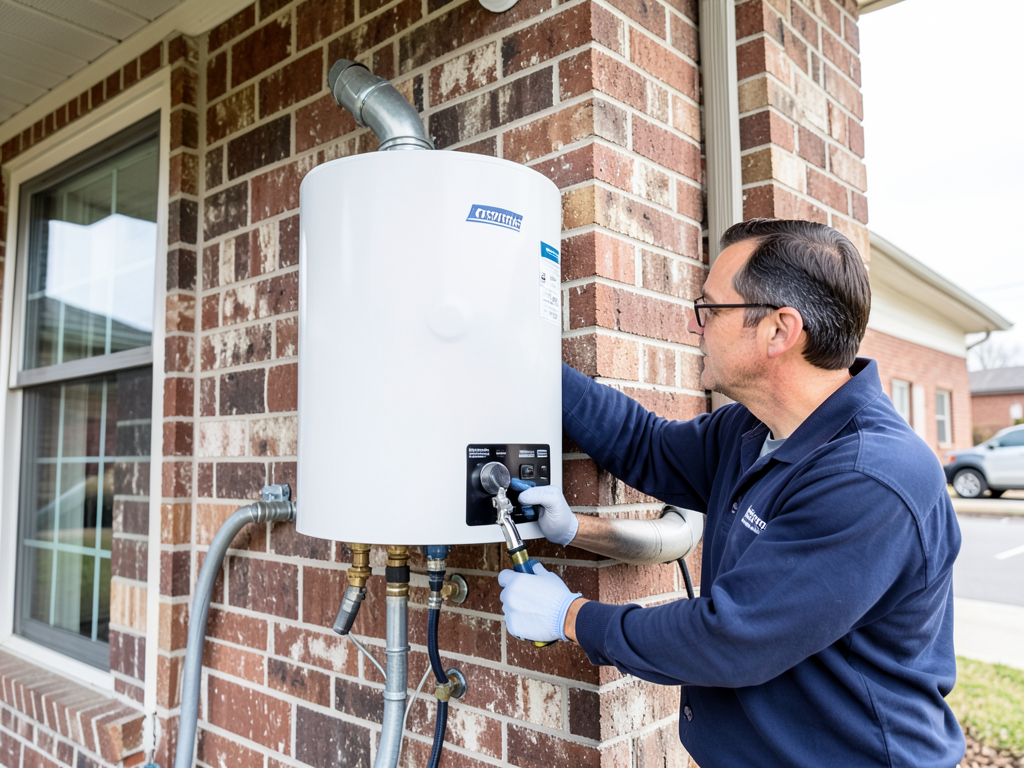
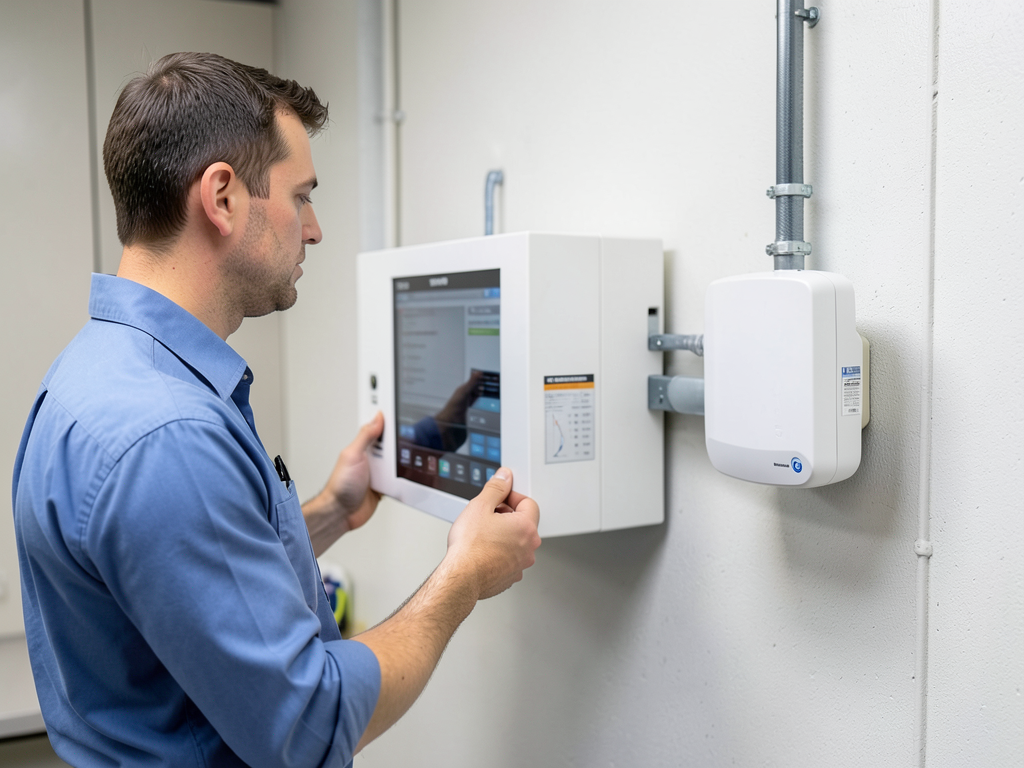
Diagram showing the internal components of a condensing tankless water heater, including the heat exchanger, flow sensor, and venting system.
Technician installing a tankless water heater on an exterior wall, demonstrating proper mounting height and clearance from windows.
Before-and-after comparison of a utility room with a bulky tank heater replaced by a compact tankless unit mounted on the wall.
{
“@context”: “https://schema.org”,
“@type”: “BlogPosting”,
“headline”: “Is a Tankless Water Heater the Right Choice for Your Oklahoma City Home?”,
“description”: “Discover if a tankless water heater fits your OKC home’s needs. Learn about installation costs, energy savings, and local factors like water hardness and building codes.”,
“wordCount”: 1216,
“datePublished”: “2026-02-24T09:56:00.000Z”,
“dateModified”: “2026-02-24T09:56:00.000Z”,
“inLanguage”: “en-US”,
“mainEntityOfPage”: {
“@type”: “WebPage”,
“@id”: “https://atlasplumbingoklahomacity.com”
},
“publisher”: {
“@type”: “LocalBusiness”,
“name”: “Atlas Plumbing Oklahoma City”,
“url”: “https://atlasplumbingoklahomacity.com”
},
“author”: {
“@type”: “Organization”,
“name”: “Atlas Plumbing Oklahoma City”,
“url”: “https://atlasplumbingoklahomacity.com”
},
“image”: {
“@type”: “ImageObject”,
“url”: “https://atlasplumbingoklahomacity.com/wp-content/uploads/2026/03/is-a-tankless-water-heater-the-right-choice-for-yo-1.png”
}
}
{
“@context”: “https://schema.org”,
“@type”: “Plumber”,
“name”: “Atlas Plumbing Oklahoma City”,
“url”: “https://atlasplumbingoklahomacity.com”,
“address”: {
“@type”: “PostalAddress”,
“addressLocality”: “Oklahoma City”
},
“areaServed”: {
“@type”: “City”,
“name”: “Oklahoma City”
}
}
{
“@context”: “https://schema.org”,
“@type”: “FAQPage”,
“mainEntity”: [
{
“@type”: “Question”,
“name”: “Navien vs. Rinnai: Which Brand Is Right for Your OKC Home?”,
“acceptedAnswer”: {
“@type”: “Answer”,
“text”: “Both Navien and Rinnai manufacture high-efficiency tankless water heaters, but they have different strengths. Navien units feature built-in recirculation pumps and Wi-Fi controls, making them ideal for larger homes where hot water takes time to reach distant fixtures. Rinnai units are known for their durability and wider range of BTU outputs.”
}
},
{
“@type”: “Question”,
“name”: “Do tankless water heaters work during power outages?”,
“acceptedAnswer”: {
“@type”: “Answer”,
“text”: “Gas tankless units with pilot lights will continue to work during power outages, but models with electronic ignition or digital controls won’t function without electricity. Electric tankless units require power to operate.”
}
},
{
“@type”: “Question”,
“name”: “How often should I descale my tankless unit in Oklahoma City?”,
“acceptedAnswer”: {
“@type”: “Answer”,
“text”: “Due to Oklahoma City’s hard water, we recommend descaling every 12 to 18 months. You’ll notice reduced flow or fluctuating water temperature when mineral buildup affects performance. Professional descaling costs $150 to $300.”
}
},
{
“@type”: “Question”,
“name”: “Can I install a tankless unit myself?”,
“acceptedAnswer”: {
“@type”: “Answer”,
“text”: “Oklahoma law requires a licensed plumber to install any water heater connected to your home’s gas or water lines. DIY installation voids warranties and can create safety hazards like gas leaks or carbon monoxide exposure. Need a Plumber Right Now in Edmond? We Handle Burst Pipes and Clogs Fast.”
}
},
{
“@type”: “Question”,
“name”: “What’s the lifespan of a tankless water heater?”,
“acceptedAnswer”: {
“@type”: “Answer”,
“text”: “With proper maintenance, tankless units last 20 to 25 years. The heat exchanger is the most critical component and typically lasts 15 to 20 years. Regular descaling extends its life significantly.”
}
},
{
“@type”: “Question”,
“name”: “Will a tankless unit save me money on my utility bills?”,
“acceptedAnswer”: {
“@type”: “Answer”,
“text”: “Most homeowners see 10% to 30% reduction in water heating costs. The exact savings depend on your household’s hot water usage patterns and the efficiency of your current tank heater.”
}
}
]
}
{
“@context”: “https://schema.org”,
“@type”: “BreadcrumbList”,
“itemListElement”: [
{
“@type”: “ListItem”,
“position”: 1,
“name”: “Home”,
“item”: “https://atlasplumbingoklahomacity.com”
},
{
“@type”: “ListItem”,
“position”: 2,
“name”: “Blog”,
“item”: “https://atlasplumbingoklahomacity.com/blog”
},
{
“@type”: “ListItem”,
“position”: 3,
“name”: “Is a Tankless Water Heater the Right Choice for Your Oklahoma City Home?”
}
]
}
{
“@context”: “https://schema.org”,
“@type”: “Service”,
“serviceType”: “Plumbing”,
“provider”: {
“@type”: “LocalBusiness”,
“name”: “Atlas Plumbing Oklahoma City”,
“url”: “https://atlasplumbingoklahomacity.com”
},
“areaServed”: {
“@type”: “City”,
“name”: “Oklahoma City”
},
“description”: “Discover if a tankless water heater fits your OKC home’s needs. Learn about installation costs, energy savings, and local factors like water hardness and building codes.”
}